
Foxconn & Nvidia Launch 100MW AI Data Center in Taiwan
Foxconn partners with Nvidia to build a 100MW AI data center in Taiwan, powering the future of generative AI, robotics, and high-speed computing.
 Utej
Utej

The Day Foxconn and Nvidia Decided to Build the Brain of Asia's AI Future
What a 100-megawatt data center in Kaohsiung really means — for Taiwan, for the tech industry, and for the world that's about to run on artificial intelligence
There's a particular kind of announcement that sounds, at first, like a dry corporate press release — numbers and megawatts and partnership frameworks and phased rollouts — and then, when you sit with it for a moment, reveals itself to be something genuinely significant. Something that will matter not just to investors and industry analysts, but to the broader shape of how the world works five and ten years from now.
The Foxconn-Nvidia partnership announced at Computex 2025 is one of those announcements.
On the surface: two large technology companies are building a data center in Taiwan. Okay. Companies build data centers all the time. But pull back the lens even slightly and the picture becomes far more interesting. This is Nvidia — the company that has become synonymous with the computational engine of the AI era — partnering with Foxconn — the manufacturing giant that assembled your last three smartphones — to build a 100-megawatt AI-focused facility in Kaohsiung that they intend to become the nerve center of artificial intelligence infrastructure across the entire Asia-Pacific region.
That's not a press release. That's a statement about the future.
What Is Computex, and Why Does It Matter?
Before we go deeper into the partnership itself, it's worth understanding the stage on which this announcement was made.
Computex is Taiwan's annual technology trade show — one of the largest and most significant in the world — where hardware companies, chip designers, system integrators, and tech visionaries converge to show what they've built and, more importantly, where they believe technology is heading. For decades, Computex was primarily a showcase for PC components, motherboards, cooling systems, and consumer electronics. It still is, in part. But in recent years, it has evolved into something broader: a stage for the AI infrastructure industry.
This shift mirrors the shift in the industry itself. The most important technology decisions being made right now are not about which smartphone has the best camera or which laptop has the slimmest profile. They're about compute — raw, industrial-scale computation. They're about who builds the data centers, who supplies the chips, who writes the software that turns silicon and electricity into artificial intelligence.
At Computex 2025, Foxconn and Nvidia made clear that they intend to be central figures in answering those questions.
Two Companies, One Pivot, and a Vision That Surprised Nobody Who Was Paying Attention
Let's talk about what these two companies are, and why their coming together makes more sense than it might initially appear.
Nvidia needs little introduction at this point. The company that spent decades making graphics cards for gamers — good business, respectable margins, loyal customers — found itself, somewhat unexpectedly, at the absolute center of the AI revolution when the world discovered that the parallel processing architecture that makes GPUs great at rendering video game graphics is also exactly what you need to train large language models.
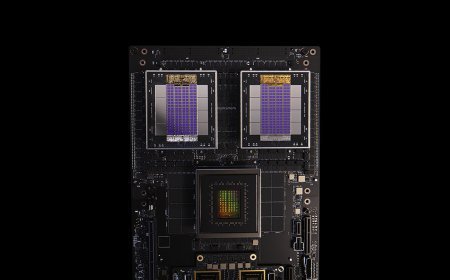
The numbers tell the story plainly. Nvidia's market capitalization has surged to levels that would have seemed like science fiction even five years ago. Their H100 GPUs became the most sought-after piece of hardware in the world, with waitlists stretching months and grey-market prices reaching multiples of the official retail cost. Now, with the Blackwell B200 architecture — which will power the Kaohsiung facility — Nvidia has pushed the boundaries of AI computation even further. These aren't chips. They're entire ecosystems of compute, networking, and software designed to run AI workloads at scales that previous generations of hardware couldn't have handled.
Foxconn is a more complicated story to tell, because most people's mental image of the company is still the one formed in the 2010s: enormous factories in Shenzhen, hundreds of thousands of workers assembling iPhones on precision lines, a contract manufacturing giant whose name appeared in tech conversations primarily in the context of labor practices and supply chain logistics.
That image is outdated.
Foxconn — formally known as Hon Hai Precision Industry — has been executing a deliberate, methodical strategic transformation for years. The company recognised, earlier than most of its peers, that the future of manufacturing is not purely about assembly. It's about intelligence — the sensors, the software, the data infrastructure, and the AI systems that make manufacturing smarter, faster, and more resilient. Their Foxconn Industrial Internet (Fii) arm is the institutional expression of this vision: a business unit explicitly focused on industrial AI, cloud services, and smart factory technology.
The partnership with Nvidia for a 100MW data center is not a departure from Foxconn's identity. It is the logical next step in a journey the company has been on for years, now arriving at a scale and visibility that makes the transformation undeniable.
These two companies, in other words, are not an unlikely pairing. They are two organisations that have both, from very different starting points, arrived at the same conviction: that AI infrastructure is the most important technology investment of this decade, and that Asia needs its own world-class version of it.
Kaohsiung: Why This City, Why Now
The decision to locate the facility in Kaohsiung — Taiwan's second-largest city, a major port, and a longstanding hub of heavy industry and manufacturing — is worth examining.
Kaohsiung is not Taipei. It doesn't have the same density of tech startups, the same concentration of venture capital, or the same international media profile. What it has is land, industrial infrastructure, a municipal government that has been actively courting technology investment, and — crucially — energy infrastructure that can support the enormous power demands of a large-scale AI data center.
A 100-megawatt data center is not a small thing. For reference, 100MW of continuous power consumption is roughly equivalent to the electricity demand of 80,000 to 100,000 average Indian households. Running that kind of load 24 hours a day, 365 days a year requires not just a connection to the power grid but a serious, sustained conversation with energy suppliers, grid operators, and — in an era of increasingly serious climate commitments — renewable energy providers.
Foxconn has indicated that the facility will be powered by sustainable energy sources, which both addresses the green computing demands of enterprise clients (increasingly, large corporations require their AI providers to demonstrate carbon responsibility) and positions the Kaohsiung data center as a model for what responsible large-scale AI infrastructure looks like.
The phased rollout — beginning at 20MW and scaling to 100MW by the end of 2026 — reflects a practical reality about building at this scale. You don't flip a switch and conjure 100 megawatts of AI compute. You build methodically, test systems, identify bottlenecks, integrate hardware generations as they arrive, and scale capacity in step with actual demand. The phased approach also reduces initial capital risk while creating a natural timeline for the facility to grow into the demand that's coming — and, by most serious projections, it is definitely coming.
The Hardware Inside: Blackwell B200 and NVLink Fusion
Every data center is ultimately defined by what runs inside it, and the Kaohsiung facility has been designed around some of the most powerful AI hardware ever built.
The Nvidia Blackwell B200 GPU is the current apex of Nvidia's AI hardware architecture. Without going too deep into specifications that can feel abstract, the practical significance of the B200 is this: it can handle AI inference and training workloads at a scale and speed that allows applications — real applications, not demos — that simply weren't feasible before. Real-time language understanding at scale. Simultaneous simulation of thousands of robotic agents in a digital twin environment. Training of increasingly large models in timeframes that are measured in days rather than weeks.
Alongside the B200, Nvidia's NIM (Nvidia Inference Microservices) platform forms the software layer that makes the hardware actually useful to businesses. NIM is essentially Nvidia's way of packaging its AI capabilities — the models, the optimisation, the deployment infrastructure — in a form that enterprises can consume without needing a team of PhD researchers to operate. It's the difference between handing someone raw ingredients and handing them a fully equipped kitchen with a head chef. The hardware is remarkable, but NIM is what turns remarkable hardware into deployable business solutions.
Equally significant is NVLink Fusion, which Nvidia unveiled at Computex alongside this announcement. NVLink Fusion is an interconnect technology that enables high-bandwidth, low-latency communication between chips — not just Nvidia chips talking to other Nvidia chips, but Nvidia chips interfacing with processors from other manufacturers. This is important because real-world AI workloads rarely run on a single type of processor. Large inference systems might combine Nvidia GPUs with custom silicon from other vendors, and the bandwidth between those chips is often the bottleneck that limits system performance. NVLink Fusion addresses that bottleneck directly, and its inclusion in the Kaohsiung facility's architecture suggests a data center designed for real-world complexity, not just benchmarks.
What Will This Data Center Actually Do?
This is the question that moves the conversation from infrastructure abstraction to human relevance: what, concretely, will this facility be used for?
The announced applications span a genuinely impressive range.
AI inference — running trained models to produce outputs in real time — is the most immediate application. Every time you use a chatbot, get a recommendation from a streaming service, or have an email automatically classified, you're using AI inference. The global demand for inference compute is growing at a rate that existing infrastructure struggles to keep up with, and the Kaohsiung facility will provide significant capacity to service that demand across the Asia-Pacific region.
Training models — the computationally intensive process of building AI systems in the first place — will also be a core use case. Training large language models or multimodal AI systems requires sustained access to thousands of high-end GPUs working in parallel for days or weeks. Data centers of the kind being built in Kaohsiung are where that work happens.
Robotics is perhaps the most forward-looking application on the list. The development and deployment of intelligent robotic systems — whether in factories, in logistics, in healthcare, or eventually in consumer applications — requires massive amounts of simulation. Before you put a robot in the real world, you run it through millions of virtual scenarios, testing its responses, refining its models, identifying failure modes. That simulation work runs in data centers. As robotics becomes one of the defining industries of the next decade, the infrastructure to develop it becomes correspondingly valuable.
Digital twins — virtual replicas of physical systems, from individual machines to entire factories to city-scale infrastructure — are another major application. A digital twin of a semiconductor fabrication plant, for instance, allows engineers to optimise processes, predict maintenance needs, and test changes before implementing them in the physical facility. Running accurate, high-resolution digital twins requires significant compute, and the Kaohsiung facility is positioned to provide it.
The Broader Context: An Industry in Full Acceleration
The Foxconn-Nvidia announcement doesn't exist in isolation. It is one significant data point in a broader pattern of AI infrastructure investment that, taken together, tells a story about where the industry believes the next decade is heading.
Intel made its own Computex 2025 moves with the introduction of the Arc Pro B60 and B50 GPUs — products aimed not at the hyperscale data center market but at workstations and edge computing. These are the machines used by engineers, designers, scientists, and enterprise developers who need AI acceleration on their desks rather than in a distant cloud. The expansion of Intel's professional GPU lineup signals that the demand for AI compute is not concentrated at the top end alone — it's permeating the entire hardware ecosystem, from the largest data center to the individual workstation.
Ray Kurzweil's humanoid robotics startup being in talks for a $100 million investment is a different kind of signal but points in the same direction. Kurzweil — the futurist and inventor whose predictions about AI timelines have proven uncomfortably accurate over the years — building a company focused on AI-powered humanoids reflects the conviction, widely shared in the industry, that the physical embodiment of AI is coming. Robots that can navigate the real world, manipulate physical objects, and work alongside humans in unstructured environments. Building those robots requires exactly the kind of compute infrastructure that Foxconn and Nvidia are constructing in Kaohsiung.
TECNO, the consumer electronics brand, used Computex to showcase AI-first PC designs and ecosystem strategies — a reminder that the AI infrastructure boom is not just a story about data centers and enterprise software. It's a story that eventually reaches every device, every user, every corner of the technology market.
The picture that emerges from Computex 2025, taken as a whole, is of an industry that has moved past debating whether AI will be transformative and is now entirely focused on who builds the infrastructure, who captures the value, and who sets the standards.
What This Means for Asia — and for India
The geography of this investment matters as much as its scale.
For years, the most significant AI infrastructure investments have been concentrated in the United States — in Oregon, Virginia, Iowa, Texas — with meaningful but secondary clusters in Europe. Asia has had data centers, of course, but not the kind of purpose-built, AI-optimised hyperscale facilities that the most demanding workloads require.
The Kaohsiung facility changes that calculus. A 100MW data center powered by Blackwell B200 GPUs and designed explicitly for AI inference, training, robotics, and digital twins is not a regional convenience. It's a statement that Asia-Pacific deserves — and is now getting — world-class AI infrastructure on its own soil.
For companies across Asia that want to build AI products and services without routing their compute through American data centers, this matters practically. Latency — the time it takes data to travel from a user to a server and back — is one of the limiting factors in real-time AI applications. A data center in Taiwan is physically closer to users in Japan, South Korea, India, Southeast Asia, and China than any facility on the US mainland. That proximity has technical consequences that translate into better products.
For India specifically, the growing AI infrastructure ecosystem in the broader Asia-Pacific region creates both opportunities and competitive pressure. India's own data center industry is expanding rapidly, with investments from global hyperscalers and domestic players alike. The Kaohsiung facility is a reminder that the competition for AI infrastructure leadership in Asia is real and active, and that India's ambitions in this space need to be matched by genuine investment and execution.
The Road to 2026 and Beyond
The target completion date of end-2026 for full 100MW capacity is ambitious but credible given the phased approach Foxconn and Nvidia have outlined. The initial 20MW phase allows both companies to validate their systems, refine their operational processes, and begin generating revenue and learnings before committing to the full build.
What comes after 2026 is the more interesting question. If the Kaohsiung facility succeeds — if it demonstrates that Foxconn can operate at this level of AI infrastructure sophistication, that Nvidia's platform performs as advertised at scale, and that the demand for AI-as-a-Service in the Asia-Pacific region is as substantial as both companies believe — the natural next move is expansion.
More facilities. More cities. Potentially other countries across the Asia-Pacific region. A Foxconn-operated, Nvidia-powered network of AI data centers that becomes the computational backbone of the region's AI economy.
That vision is not stated in the Computex announcement. But it is the logical destination of the journey being described. Companies don't build one 100MW data center and stop. They build one, learn from it, and then build the next one faster and better.
The Intelligent World Needs Infrastructure — and Infrastructure Needs Investment
Here is the simplest way to understand why the Foxconn-Nvidia announcement matters:
Every AI product that improves your life — every recommendation that surfaces exactly what you wanted, every translation that bridges a language barrier, every medical image analysis that catches something a human eye might have missed, every robotic system that handles dangerous work so a human doesn't have to — runs on infrastructure. On chips. On power. On cooling systems. On networking. On the unglamorous, expensive, essential physical reality of data centers.
The intelligence of the AI era is not magic. It's engineering. It's investment. It's the patient, capital-intensive work of building the places where intelligence actually runs.
Foxconn and Nvidia, in Kaohsiung, are building one of those places. And when it's operational — when the B200 GPUs are running, when the NIM platform is serving inference requests, when the digital twins of Asia's factories are spinning in simulation — it will be infrastructure that is felt not as a headline but as capability. As speed. As things working that didn't work before.