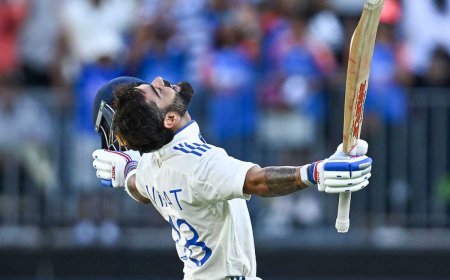

IPL 2025 Suspended for A Week amid India-Pakistan Tensions
IPL 2025 has been officially suspended due to unforeseen circumstances including geopolitical tensions and logistical issues, leaving fans and franchises in shock.
 Utej
Utej

The Day Cricket Fell Silent: How the India-Pakistan Conflict Brought the IPL to a Standstill — and How the Game Found Its Way Back
There is a particular quality to a cricket match being abandoned mid-innings. Everything stops — not cleanly, not conclusively, but mid-motion, like a sentence that ends without a full stop. The players walk off. The ground goes quiet. The scorecard freezes at a number that was never meant to be final. And in the stands, tens of thousands of fans sit for a moment in collective uncertainty, not quite sure what just happened or what comes next.
That is how IPL 2025 ended its first act.
On the evening of 8 May 2025, Punjab Kings were playing Delhi Capitals at the Himachal Pradesh Cricket Association Stadium in Dharamsala — one of the most beautiful cricket grounds in the world, perched in the foothills of the Himalayas, with views of snow-capped peaks that no other venue on earth can match. The match was ten overs and one ball old. Punjab Kings were batting. And then the floodlights went out.
Not because of a power failure. Because of what was happening less than 200 kilometres away.
In Jammu, explosions had been reported earlier that evening. India had launched Operation Sindoor two days prior — a military strike on nine terror camps in Pakistan and Pakistan-administered Kashmir in retaliation for the Pahalgam attack that had killed 26 civilians on 22 April. The border was not just tense. It was active. And the HPCA Stadium in Dharamsala, sitting that close to it, was suddenly not a place where cricket belonged.
The match was abandoned. The following morning, May 9, the BCCI did something it had done only once before in eighteen seasons: it suspended the entire Indian Premier League.
The Moment the Decision Was Made
The BCCI's statement on 9 May was measured in its language but extraordinary in its implications. "The Board of Control for Cricket in India has decided to suspend the remainder of the ongoing TATA IPL 2025 with immediate effect for one week," it read. "Further updates regarding the new schedule and venues of the tournament will be announced in due course after a comprehensive assessment of the situation in consultation with relevant authorities and stakeholders."
What the statement did not fully convey was the urgency behind the decision. The IPL Governing Council had been receiving representations from franchise owners throughout the day. Players — particularly overseas players, many of whom had families watching developments from Australia, England, South Africa, and the West Indies — were unsettled. Pat Cummins and Mitchell Starc, two of Australia's most prominent players in the tournament, were flown out. England's eight centrally contracted players were effectively left to make their own decisions about whether to remain.
The broadcaster and sponsors had their own concerns. A match in Dharamsala had already been relocated to Ahmedabad earlier in the week, when the security situation in the north began deteriorating. Operating an entire cricket tournament, with players, support staff, media, and fans moving between cities, in a country experiencing active military operations — that was a different calculus entirely.
The BCCI framed the decision in terms of collective responsibility: "The Board considered it prudent to act in the collective interest of all stakeholders." But behind that careful corporate language was something simpler and more human: the right thing to do, when the country around you is at war, is to stop playing cricket.
The Long History Behind a Particularly Emotional Moment
The 2025 suspension was only the second time in IPL history that the tournament had been halted mid-season. The first was in 2009, when the entire IPL was relocated to South Africa because of security concerns around the Indian general election — which is a different kind of suspension, more logistical than existential. The 2025 suspension felt different because of what triggered it.
The IPL began in 2008, the brainchild of Lalit Modi and the BCCI, combining the pulling power of India's cricket-obsessed hundreds of millions with the format of Twenty20, which had been evolving as the sport's most electric expression for a few years. In its first season, the IPL was already the most-watched cricket tournament on earth . By 2025, the league had reached a scale few sporting competitions could match. With 18 franchises and a massive worldwide audience, it was generating billions through media rights, sponsorships, and soaring team valuations.
The 2025 season had started on 22 March with the usual fanfare. The tournament was scheduled to run until 25 May, with 74 matches spread across eighteen teams.When the lights went out in Dharamsala on 8 May, the tournament had already reached its 58th completed match. The points table was taking shape. Some teams were already eliminated — Sunrisers Hyderabad, Rajasthan Royals, and Chennai Super Kings had all mathematically exited the playoffs race. Punjab Kings, Delhi Capitals, Mumbai Indians, and others were fighting for the remaining playoff spots.
Suryakumar Yadav, the Mumbai Indians batter who has made a habit of redefining what Twenty20 batting can look like, led the run-scoring charts with 510 runs. Noor Ahmad of CSK and Prasidh Krishna of Gujarat Titans were level on 20 wickets each, the leading wicket-takers. The cricket had been good. And then the world outside the stadium made it impossible to continue.
What Was Actually Happening Outside the Ground
To understand the suspension fully, you have to understand the context — which is both extraordinary by recent historical standards and, at the same time, part of a long and painful pattern.
The Pahalgam terror attack of 22 April 2025 killed 26 tourists in Indian-administered Kashmir. The attackers targeted civilians specifically on the basis of their religion, and the attack bore the hallmarks of The Resistance Front, an offshoot of Pakistan-based Lashkar-e-Taiba. India's response was Operation Sindoor on 6-7 May — precision strikes on nine terror camps. Pakistan denied involvement in Pahalgam and called the strikes unprovoked.
The days that followed produced the most intense India-Pakistan military confrontation in decades. Cross-border fire, contested airspace, air raid sirens in Indian border cities, evacuation of civilians from areas close to the Line of Control. Jammu — within 200 kilometres of Dharamsala — heard explosions on the evening of 8 May. Whatever else was happening that night, a cricket match was not the priority.
The PSL — Pakistan's own T20 league — had already moved its remaining fixtures to the UAE before suspending itself indefinitely. Cricket was not just pausing in one country. The subcontinent's two premier T20 leagues had both stopped, within days of each other, because of the same conflict.
The International Dimension: Players, Franchises, Broadcasters
The IPL is not merely Indian in its cast. It is the most international cricket tournament in the world by player participation — a fact that made the suspension's reverberations immediate and global.
Australian players had contracts with multiple franchises. When the suspension was announced, Cricket Australia's guidance was clear: players should leave. Pat Cummins and Mitchell Starc, both of whose presence added enormous value to their respective franchises, were on flights home. English players followed. South African and West Indian players made similar decisions, some with franchise encouragement, some independently.
This created a secondary problem that the BCCI would need to manage when it came time to restart: not all players who left were guaranteed to return. Eight centrally contracted England players were left to decide individually whether they would come back to an active conflict zone. Some overseas coaches and support staff who had been involved in the PSL had already returned home from the UAE. The human geography of the tournament had been disrupted in ways that could not be fully repaired by a revised schedule.
For broadcasters, the financial stakes were enormous. Star Sports and Disney — the primary rights holders — had structured their revenue models around continuous broadcast through the playoff period. Every match abandoned or rescheduled represented lost advertising inventory, lost subscriber engagement, and contractual complications. Sponsors had similar exposure. The BCCI and its commercial partners began what would become a week of intensive behind-the-scenes negotiation about what resumption would look like and who would bear the cost of the disruption.
The Ceasefire and the Decision to Return
On the weekend of 10-11 May, with significant involvement from the United States — whose initial position of non-intervention shifted as the conflict's scale became apparent — India and Pakistan agreed to a ceasefire. The announcement did not end the tension overnight. But it changed the security calculus enough for the BCCI to begin the conversations that would lead to resumption.
On 12 May, three days after the suspension, the BCCI released its revised schedule. The statement's opening line was a quiet acknowledgment of what had just happened: "The BCCI takes this opportunity to once again salute the bravery and resilience of India's armed forces, whose efforts have enabled the safe return of cricket. The Board reaffirms its commitment to national interest while ensuring the successful completion of the league."
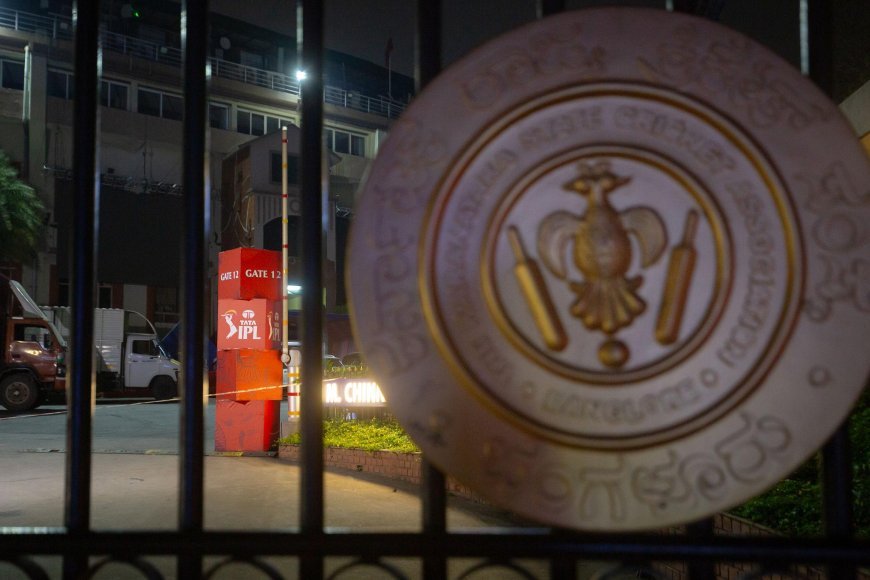
The revised tournament would resume on 17 May, with RCB versus KKR at the M. Chinnaswamy Stadium in Bengaluru. The final, originally scheduled for 25 May in Kolkata, would now be played on 3 June. The home-and-away format that had defined the first half of the season was abandoned for the remainder. Six neutral venues were designated: Bengaluru, Jaipur, Delhi, Lucknow, Mumbai, and Ahmedabad.
Three franchises — Punjab Kings, CSK, and SRH — would not get to play on their original home grounds for the rest of the season. For CSK and SRH, who were already eliminated, this was a footnote. For Punjab Kings, sitting third on the points table with 15 points from 11 matches and a genuine shot at the playoffs, playing their remaining home fixtures at neutral venues was a real disadvantage.
The Punjab Kings-Delhi Capitals match that had been abandoned in Dharamsala at 10.1 overs was replayed entirely, rescheduled for 24 May in Jaipur.
May 17: Cricket Comes Back
When RCB and KKR walked out at the M. Chinnaswamy Stadium on the evening of 17 May, the atmosphere was something beyond the ordinary excitement that usually precedes an IPL knockout-chase situation.
Cricket had been away for eight days. In those eight days, the country had been through its most intense military confrontation since 1999. A ceasefire had been announced. Diplomats had been expelled. The Indus Waters Treaty had been suspended. Two nuclear-armed nations had stepped back from an edge that the world had watched with genuine, collective anxiety.
And now cricket was back.
That is a small thing in the context of everything that happened. Lives were lost in Pahalgam. Soldiers fought on both sides of a border. Civilians near the Line of Control endured nights of fear. The return of a cricket tournament is not equivalent to any of that, and it is worth saying so clearly.
But it is also true that cricket — particularly in India — is not merely sport. It is shared experience. It is the collective act of millions of people watching the same thing, at the same time, together. When the country was in its most anxious week in years, the absence of cricket was felt differently than the absence of, say, football. Its return meant something, even if that something was modest compared to the larger context.
The BCCI's statement understood this. Saluting the armed forces. Reaffirming commitment to national interest. These were not empty phrases. They were an acknowledgment that the resumption of cricket was happening in a particular historical moment, and that the organisation understood its place within it.
What the Revised Season Looked Like
Seventeen matches remained after the resumption, including four playoff games. Two double-headers were scheduled for Sundays to compress the calendar. The playoff structure ran from 29 May to the final on 3 June — Qualifier 1 on 29 May, the Eliminator on 30 May, Qualifier 2 on 1 June, and the summit clash on 3 June.
The points table at the suspension point had Punjab Kings third, needing results to go their way. Delhi Capitals, Kolkata Knight Riders, and Lucknow Super Giants were the teams fighting for the remaining playoff spots alongside Punjab. The cricket in the resumption period was, by most accounts, played with an intensity that reflected how much the break had sharpened the stakes.
The absence of Dharamsala and Mohali as venues was not merely logistical — it was symbolic. These are northern venues, venues where the proximity to the border makes cricket feel genuinely connected to the idea of India as a nation. Playing them out of the schedule for security reasons was a visible mark left on the tournament by the conflict that had interrupted it.
What This Episode Tells Us About Cricket and the World
The IPL suspension of 2025 will be remembered as the week the world reminded cricket that it does not exist outside of history.
The IPL has always operated with a kind of insulation from ordinary reality — the lights, the music, the enormous franchise valuations, the sense that inside the stadium bubble, only the cricket matters. That insulation held for seventeen seasons. In the eighteenth, it did not.
What happened was not a failure of the IPL or of cricket administration. The BCCI made the right call, made it quickly, and managed the resumption with competence. What happened was simply a reminder that sport, for all its power to transport people, remains embedded in the world that produces it. When two nuclear-armed neighbours go to war, the cricket stops.
And when the ceasefire holds, the cricket comes back. That too is a reminder — perhaps a more hopeful one — of what sport represents. Not a denial of conflict, but a return to something shared when the worst of the conflict passes.
The BCCI's final line in its resumption statement captured the strange mixture of the ordinary and the historic that defined this moment: "The Board reaffirms its commitment to national interest while ensuring the successful completion of the league."
In the space between those two clauses — national interest and the successful completion of a league — sits everything the IPL suspension of 2025 was about. Cricket cannot always come first. But when conditions allow, it is worth coming back to. And on 17 May, in Bengaluru, it did.