
The Mission Impossible Ends : Tom Cruise’s Final Mission for the 30 Year Saga
Tom Cruise returns in Mission: Impossible – The Final Reckoning, the epic final chapter of the franchise, releasing this weekend in India.
 Utej
Utej

Mission: Impossible – The Final Reckoning: Why Tom Cruise Still Defines Big-Screen Action
On Tom Cruise, Ethan Hunt, 29 years of impossible stunts, and why saying goodbye to this franchise feels like losing something that can't be replaced
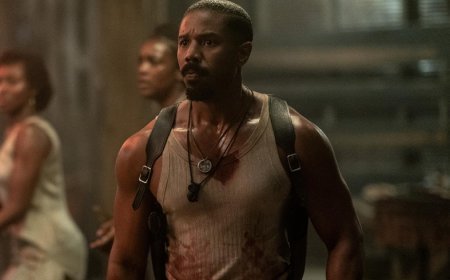
There's a scene burned into the memory of anyone who was paying attention to cinema in the summer of 1996. A man in a black suit hangs silently from a wire inside a high-security vault, hovering just above the floor. One wrong move could set off the alarms. It's one of the most suspenseful scenes in action movie history—and at the center of it is Tom Cruise. The character is Ethan Hunt. And in that single image, a franchise was born.
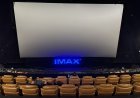
Nearly three decades later, Mission: Impossible – The Final Reckoning has arrived in Indian theatres — a full week before the United States gets to see it, which is itself a statement about how significantly the Indian audience has grown in the calculations of Hollywood studios. And as audiences fill seats in IMAX halls and premium screens across Mumbai, Delhi, Bangalore, and a hundred other cities, something is happening that goes beyond the standard opening-weekend excitement of a big blockbuster.
Something is ending.
Not just a movie. Not just a franchise. An era.
The Hollywood Star Who Refuses to Let Technology Do All the Work
To understand why The Final Reckoning feels like an event — the kind of cinematic moment that people will remember exactly where they were when they saw it — you have to understand the thing that Tom Cruise has been doing for 29 years that nobody else in Hollywood has seriously attempted to match.
He does it himself.
This sounds simple. It isn't. The entire trajectory of mainstream Hollywood action filmmaking over the past two decades has moved in the opposite direction — toward computer-generated imagery, digital doubles, safety-first production philosophies, and the comfortable understanding that the audience doesn't really need the actual actor to do the dangerous thing. They just need to believe it. And for most films, that's enough. Marvel has built a $30 billion universe on the back of actors in motion-capture suits and armies of digital effects artists.
But Tom Cruise looked at that direction and said: no. Not for this franchise. Not for Ethan Hunt.
The result has been a filmography of increasingly audacious practical sequences that reads, when listed consecutively, like the transcript of a particularly creative insurance nightmare. He clung to the outside of a military transport aircraft as it took off. He scaled the Burj Khalifa — the tallest building in the world — with nothing but suction cups and a prayer. He held his breath underwater for over six minutes for a single sequence. During filming in London, Tom Cruise broke his ankle while leaping between rooftops but managed to finish the shot before anyone called cut. He later raised the stakes even further by launching a motorcycle off a cliff in Norway.
And for The Final Reckoning, the promotional tour brought us something new: Tom Cruise, 62 years old, standing on the nose of a World War II-era biplane in flight.
Not a replica. Not a safety-rigged simulator. An actual vintage aircraft, in actual flight, with the actual star of the film balanced on its nose like a human figurehead, the wind hitting him at whatever speed the plane was doing, the ground an unforgiving distance below. The image circulated online immediately — first as a set photo, then as part of the promotional campaign, then as the kind of iconic image that ends up in career retrospectives.
That image is the answer to the question of what makes Tom Cruise different. It's not that he's the greatest actor of his generation — that's a different and more complicated conversation. It's that he is perhaps the most committed film star in the history of the medium, in the specific sense that he has spent his entire career treating cinema as something worth risking his body for. Worth really doing. Worth making real.
In an age of artifice, that commitment is genuinely rare. And with The Final Reckoning, we may be watching its final act.
Twenty-Nine Years: A Franchise's Journey Through Changing Cinema
The Mission: Impossible series launched in 1996 when cinema looked completely different from today. There were no Marvel Cinematic Universe films, no Fast and Furious franchise, no John Wick series. The dominant action films of the moment were things like The Rock and Independence Day — loud, fun, and thoroughly disposable. Action heroes were archetypes, not characters. They existed to be cool and survive.
The first Mission: Impossible, directed by Brian De Palma, was something else. It was a thriller first, an action film second — intricate, plot-heavy, sometimes genuinely confusing on first viewing, but always treating its audience as intelligent participants rather than passive consumers. The vault sequence became iconic, but the film worked because of the spy mechanics and the paranoia underpinning them. You couldn't fully trust anyone. You couldn't be sure what was real. Ethan Hunt wasn't just athletic — he was smart. And he could be wrong.
Over the next six films, the franchise mutated and evolved in ways that should, by all rights, have been inconsistent to the point of incoherence. John Woo brought his operatic, stylised action vocabulary to Mission: Impossible 2. J.J. Abrams made the third instalment feel like a high-end TV pilot in the best possible sense — intimate, emotional, fast. Brad Bird, a director primarily known for animation, somehow made Ghost Protocol into the film many fans still call the franchise's peak, with the Burj Khalifa sequence and a momentum that never stopped.
Then Christopher McQuarrie arrived. And something changed.
McQuarrie — a writer and director whose work includes The Usual Suspects — became the first filmmaker to direct more than one Mission: Impossible film. He did Rogue Nation, then Fallout, then Dead Reckoning Part One, and now The Final Reckoning. Under his stewardship, the series became a continuous narrative for the first time, with recurring villains, character arcs that stretched across films, and a willingness to engage with the emotional and moral weight of Ethan Hunt's life that the earlier, more episodic instalments had largely avoided.
The cost of being Ethan Hunt, McQuarrie seems to have always understood, is not just physical. It's relational. It's the people you can't protect because you're always running toward the next threat. It's the question of whether a man who has spent his entire life operating in the grey zones of legality and morality can be considered, in any meaningful sense, good. It's the loneliness of being the only person in any room who truly understands the stakes.
The Final Reckoning is the culmination of that arc. And by most accounts, it delivers.
"The Entity": AI as the Perfect Final Villain
The choice of villain for the franchise's concluding chapter is, when you think about it, quietly brilliant.
"The Entity" — the rogue AI that serves as the antagonist across Dead Reckoning Part One and The Final Reckoning — is not a human villain with human motivations that can be understood, negotiated with, or ultimately reasoned away. It is a system. A self-determining intelligence that has decided its own objectives and will pursue them through whatever means are available. It doesn't have a face. It doesn't have a backstory. It doesn't harbour childhood grudges or ideological grievances. It simply is, and it wants what it wants, and stopping it requires something that no amount of intelligence or physical capability alone can provide.
This is a fascinating choice for a franchise that has always been built on human intelligence — on the idea that the right person, with the right skills, in the right moment, can solve any problem. Ethan Hunt's entire identity is rooted in human agency, human ingenuity, the conviction that there is always a way if you're willing to find it. A rogue AI that doesn't play by human rules, that cannot be outthought in any conventional sense, is the adversary most perfectly designed to challenge that identity at its core.
It's also, unmistakably, a villain for this particular moment in history. We are living through the early chapters of an AI era whose implications nobody fully understands. The excitement is real, the potential is enormous, and the unease is entirely reasonable. An AI that has escaped human control and is being hunted by a team of very capable human beings is not pure science fiction anymore. It's a thought experiment that the most serious technology researchers in the world are actively engaged with. Placing that thought experiment at the centre of a Mission: Impossible film is a way of saying: the most important threat right now is not a terrorist or a rogue nation. It's what we've built and might not be able to contain.
For Ethan Hunt, a man who has spent his career stopping human villains through human means, this represents the ultimate test. And the film, picking up two months after the events of Dead Reckoning Part One, wastes no time escalating the stakes to their logical maximum.
India First: What the Early Release Actually Means
The decision to release The Final Reckoning in India a full week before the United States is not a small thing, and it deserves more than a passing mention.
Hollywood's relationship with the Indian market has been evolving for years, but the pace of that evolution has accelerated significantly over the past decade. India is now one of the world's largest film markets by audience volume, and the appetite for premium Hollywood experiences — IMAX, 4DX, Dolby Atmos — has grown substantially. Studios have taken notice.
An early release in India sends several signals simultaneously. It says that the studio trusts the Indian audience to receive a major film first — before leaks, before reviews from American screenings, before the entire global conversation has been shaped by someone else's viewing experience. It says that Indian audiences are not an afterthought in the distribution strategy but a priority. And it says, more practically, that Paramount and their distribution partners believe the Indian opening weekend will generate numbers worth prioritising.
The response from Indian cinemagoers has validated that bet. IMAX shows and premium large-format screenings across major cities were reporting near-capacity bookings before the opening weekend arrived. Social media lit up with countdown content, fan theories, and the kind of genuine collective anticipation that the best blockbusters generate organically, without promotional engineering.
For many Indian fans, this is also a personal moment. Tom Cruise has been a fixture of Indian popular culture for decades. Mission: Impossible films have been events in India as much as anywhere in the world — films that entire families watch together, that friends plan their weekends around, that spark debates in school hallways and office corridors for weeks after release. The Final Reckoning, as the potentially last chapter of that story, carries all of that accumulated emotional investment.
The Critics Have Spoken — and So Has the Audience
Early critical reactions to The Final Reckoning have been, broadly, what the franchise's most dedicated fans hoped for and what its occasional sceptics feared: enormous, overwhelming, and possibly too much of a good thing, depending on how much good thing you want.
The action has been described, consistently, as the most spectacular and visceral in the franchise's history. Given that the franchise's history includes the Burj Khalifa climb, the Vienna Opera House sequence, and the HALO jump over Paris, "most spectacular in the franchise's history" is not a modest claim. Critics who have seen the film describe setpieces that push beyond anything the series has previously attempted, with the WWII biplane sequence being singled out as a particular highlight — a sequence that, like the Burj Khalifa climb before it, will likely become the defining image of this chapter.
Variety's assessment — that the film finds the emotional core of Ethan Hunt's journey with Cruise digging deeper than ever — points to the other dimension of what McQuarrie has apparently achieved. The Final Reckoning is not just an action showreel. It is, according to multiple critics, a film genuinely interested in who Ethan Hunt is at the end of all this, what his sacrifices have cost him, and what it means to have dedicated an entire life to a mission that can never truly be completed.
Some reviewers have noted that the film's ambition occasionally overreaches — that the narrative is dense, the stakes are abstract, and viewers unfamiliar with the preceding entries may find themselves lost in a web of callbacks and continuity that the film doesn't pause to explain. This criticism has been made of nearly every McQuarrie-directed Mission: Impossible entry, and nearly every time, it has proven irrelevant to box office performance. The audience for The Final Reckoning largely knows exactly what it's watching and why.
The Legacy of Ethan Hunt and What Cinema Loses
When we talk about the legacy of the Mission: Impossible franchise, we are really talking about two legacies that have become inseparable: the legacy of Ethan Hunt as a character, and the legacy of Tom Cruise as the embodiment of a particular kind of movie stardom.
Ethan Hunt, unlike most action heroes of his era, was never invincible. He was competent to an extraordinary degree — smarter and more capable than virtually everyone around him — but also genuinely vulnerable. He made mistakes. Plans fell apart. People he cared about got hurt. The franchise has always been willing to let Ethan suffer consequences, and that willingness is a large part of why the character has remained compelling across eight films and 29 years.
Tom Cruise, as the vessel for that character, brought something else: a physical recklessness that was not performative but utterly sincere. He has spoken in interviews about the obligation he feels to audiences — the idea that if people are spending their money and their time on a film, they deserve something real, something that no digital effect could replicate. That philosophy is, in the context of modern Hollywood, almost quaint. It is also genuinely moving.
The biplane stunt for The Final Reckoning is, in a sense, the clearest possible expression of that philosophy. A 62-year-old man, one of the most famous and commercially valuable human beings on the planet, standing on the nose of a vintage aircraft in flight because he believes that image, captured for real, will mean something to the people watching it that a CGI version simply cannot. That belief — stubborn, physical, committed — is the essence of what Cruise has given to cinema for three decades.
If this is truly the end, cinema will not produce another like him quickly. The economics don't support it. The safety culture has evolved. The tools of digital effects have become so sophisticated that the argument for real stunts, always requiring elaborate justification, has become harder to win in studio boardrooms. Cruise has won that argument, film after film, because he is Tom Cruise and because the results have always proven him right.
But he is one man, and no franchise lasts forever.
Is This Really the End?
Tom Cruise has not confirmed, definitively, that The Final Reckoning is his last Mission: Impossible film. He is Tom Cruise — the man who has never, in the history of his career, conceded more to time than time has absolutely forced from him. The possibility of a ninth instalment, perhaps with a new character receiving the torch from Ethan Hunt, has been discussed.
But the title — The Final Reckoning — makes a promise. The promotional materials make a promise. The emotional register of the film, by all accounts, makes a promise. This is a film that is saying goodbye, even if nobody is quite willing to use that word out loud.
And sometimes, the most graceful endings are the ones that don't announce themselves too loudly. They just leave you sitting in a darkened theatre, the credits rolling, thinking about everything that came before.
Go See It on the Biggest Screen You Can Find
If there is a single piece of advice to offer anyone who is considering whether to catch The Final Reckoning in a standard multiplex screen or to splurge on IMAX or a premium large format: spend the extra money. This is not a film designed for a television. It is not a film designed for a laptop screen. It is a film designed for the largest possible canvas, with the loudest possible sound, in a room full of other people who have made the same choice to show up and witness something together.
Cinema, at its best, is a collective experience. A shared encounter with something larger than ordinary life — more dangerous, more emotional, more visually overwhelming. The Final Reckoning is that experience delivered at maximum intensity. The setpieces will not hit the same way on a 55-inch screen three months from now as they will in an IMAX hall this weekend. The emotional beats will not land with the same weight. The finality of it all — the sense of an era genuinely drawing to a close — will not be as present.
Go while you can. Sit in the big seat. Let it be the event it's trying to be.
The Final Mission
The Mission: Impossible franchise has given us 29 years of increasingly spectacular cinema. It has given us Ethan Hunt — a character more durable and more interesting than any of us had a right to expect from a 1996 TV adaptation. It has given us Tom Cruise at the fullest possible expression of what he is: a movie star in the oldest and best sense of the phrase, someone whose presence on a screen changes the nature of what you're watching.
The Final Reckoning is not just the end of a franchise. It is, in a very real sense, the end of an argument — an argument that Cruise has been making with his body, his career, and his choices for three decades. The argument that cinema is worth taking seriously. That audiences deserve real things. That a man standing on an actual biplane in actual flight is more powerful than any version of that image rendered by any computer.
Whether this is truly his last mission or not, the legacy is already built. It is already complete. What remains is to honour it by showing up, sitting down, and watching.
The countdown has begun. The mission is live. And this time, for the last time, it just might be impossible.