

India’s New AC Rule: Why Cooling Below 20°C Might Be Banned
India’s New AC Rule: A Complete Guide to the 20°C–28°C Cooling Limit and Energy Savings
 prasad
-
Most people in India lower their AC temperature during peak summer without thinking twice about the electricity impact. But the government’s new proposal to cap AC cooling between 20°C and 28°C could change how millions use air conditioners and many headlines are missing the bigger picture.
In this guide, you’ll learn what the new AC temperature rule actually means, why it matters, how it affects your daily usage, and the smartest temperature settings for comfort and savings.

What Does the New Rule Say?
# Key Takeaways
India’s new AC temperature rule proposes limiting air conditioner settings between 20°C and 28°C to improve national energy efficiency.
Lower AC temperatures such as 16°C or 18°C significantly increase electricity consumption because compressors run longer.
A 24°C setting is widely considered the ideal balance between cooling comfort and electricity savings.
Peak summer electricity demand in India continues to rise due to widespread AC usage — Source: Central Electricity Authority, 2025.
Commercial buildings and offices could reduce cooling costs substantially through optimized thermostat settings.
Energy-efficient cooling habits include moderate temperatures, regular servicing, and proper room insulation.
Most households are unlikely to notice major comfort differences when using ACs within the recommended range.
# India to soon propose Standardizing of air conditioner temperature limits
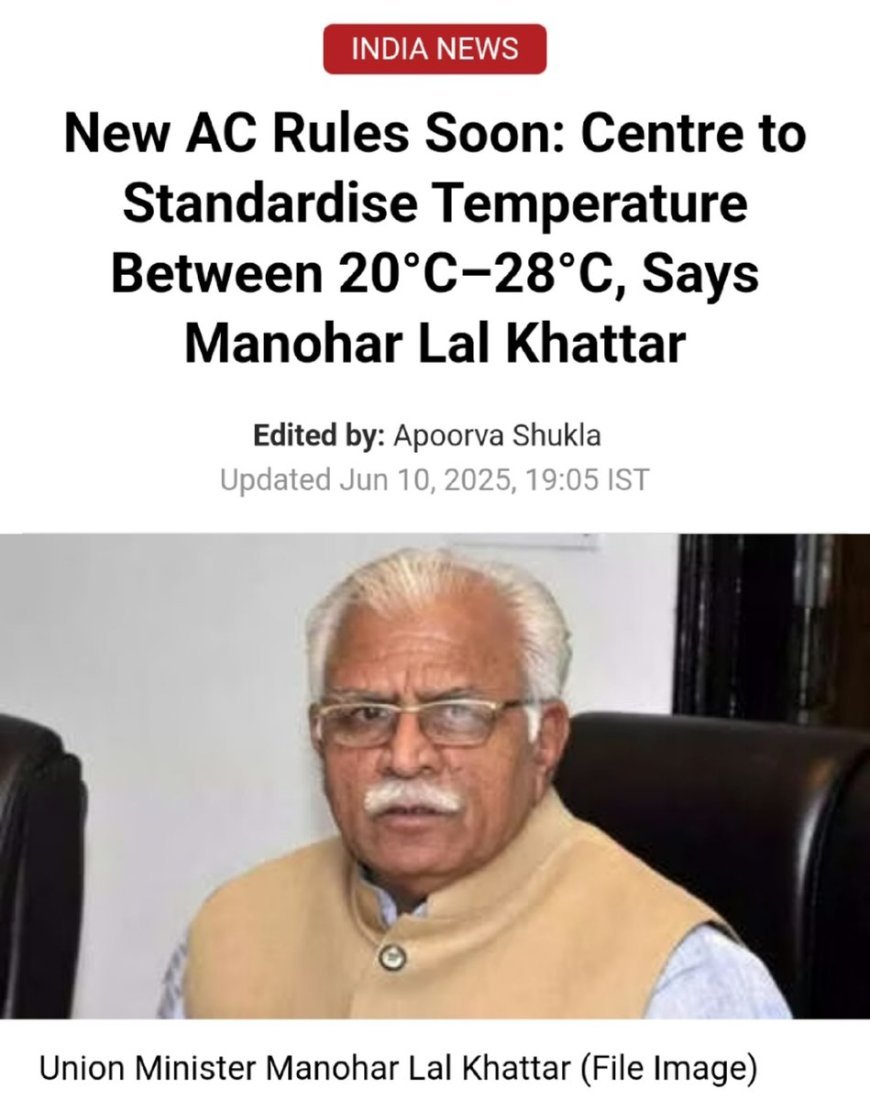
The new AC temperature rule in India proposes limiting air conditioner cooling settings between 20°C and 28°C to improve energy efficiency nationwide.
The proposal mainly aims to standardize how air conditioners operate across homes, offices, hotels, and commercial buildings. Under the proposed framework, users may no longer be able to reduce cooling below 20°C or increase heating above 28°C in certain regulated systems.
At the same time, the policy is part of India’s broader effort to reduce excessive electricity consumption during extreme summers. India recorded peak power demand above 250 GW during summer months, according to the Ministry of Power (2025). Rising AC usage is one of the biggest contributors to this surge.
Many households set their ACs to 16°C or 18°C because they believe lower temperatures cool rooms faster. In reality, air conditioners cool rooms at nearly the same speed regardless of the selected temperature. Lower temperatures simply make compressors work longer, which increases electricity consumption.
> Your AC will soon be limited to 20°C–28°C in India. The government says it'll save a lot of electricity..”
[Internal link: "understanding India’s energy efficiency policies" → suggested target page/topic]
[Insert image: Government announcement graphic explaining the 20°C to 28°C AC range | Alt text: "Understand India AC temperature rule and cooling limits"]
Why Has the Government Introduced This Rule?
# Why Is India Introducing the New AC Rule
India is limiting AC cooling between 20°C and 28°C to reduce electricity demand, lower carbon emissions, and improve energy efficiency nationwide.
Air conditioners are among the highest electricity-consuming appliances in Indian homes. According to the International Energy Agency (IEA), space cooling demand in India could grow nearly ninefold by 2050 without strong efficiency measures.
Another major reason is that air conditioners consume significantly more electricity at lower temperatures because compressors run continuously for longer periods. This directly increases household electricity bills and places additional stress on the national power grid during heatwaves.
For example, setting your AC at 18°C instead of 24°C can increase energy consumption by approximately 20% to 30%, depending on room size and insulation quality — Source: Bureau of Energy Efficiency (2025).
# How Limiting AC Cooling Helps Save Electricity
Air conditioners consume significantly more electricity when operated at extremely low temperatures such as 16°C or 18°C.
When indoor temperatures are set dramatically lower than outdoor temperatures, compressors work much harder to maintain the difference. This increases electricity usage and can also reduce the long-term efficiency of the appliance.
For example, if the outdoor temperature is 40°C and your AC is set to 16°C, the system must continuously maintain a massive 24-degree temperature gap. However, a 24°C setting* significantly reduces this load while still providing comfortable cooling.
> As Indian summers get hotter and electricity demand hits record highs, the government is drawing a clear line — your AC can only go so low, and there's a good reason for it "
Reducing nationwide electricity demand can also lower dependence on coal-powered electricity generation during peak summer months. India still relies heavily on thermal power for electricity production, according to the Central Electricity Authority (2025).
[Internal link: "best ways to reduce electricity bills in summer" → suggested target page/topic]
# How Will the New AC Rule Impact Homes and Offices?
The new AC rule will mainly encourage homes and offices to adopt more energy-efficient cooling habits.
Most households may not notice significant differences in comfort because temperatures between 23°C and 25°C already provide effective cooling for typical Indian weather conditions.
Offices and commercial buildings, however, could experience major cost savings because centralized cooling systems operate for longer hours every day. According to the Bureau of Energy Efficiency, increasing AC temperatures by just 1°C can reduce electricity consumption by nearly 6%.
# How the New Temperature Rule Affect Daily Comfort
| Location Type | Typical Current Setting | Recommended Range | Potential Savings |
|---|---|---|---|
| Homes | 18°C–22°C | 24°C–26°C | Moderate |
| Offices | 19°C–21°C | 24°C | High |
| Hotels | 18°C–20°C | 24°C | Very High |
| Commercial Buildings | 18°C–22°C | 24°C–25°C | Significant |
For example, a large office building operating centralized HVAC systems for 10 hours daily could reduce annual electricity expenses substantially by increasing thermostat settings from 20°C to 24°C.
[Insert image: Comparison chart showing electricity use at different AC temperatures | Alt text: "Compare AC electricity consumption at 18C vs 24C"]
---
# Keeping the AC at extremely low temperatures increases power consumption.
Existing air conditioners may not require immediate replacement, but future compliance standards could affectsoftware settings and manufacturing specifications.
Current discussions suggest the policy may focus more on future manufacturing regulations rather than immediatelyrestricting existing AC units already installed in homes and offices.
This means many consumers may continue using their current systems normally, while manufacturers could gradually introduce new models designed around the recommended cooling range.
The government may also encourage manufacturers to implement energy-efficient default temperature settings in future air conditioners.
---
# Best AC Temperature for Comfort and Savings
Experts widely recommend keeping air conditioners around 24°C because it provides the best balance between comfort, energy savings, and cooling efficiency.
A moderate AC temperature:
* Reduces electricity bills
* Improves compressor efficiency
* Lowers environmental impact
* Prevents excessive indoor cooling
* Reduces strain on the power grid
In addition to setting the right temperature, households can improve cooling efficiency by:
1. Cleaning AC filters regularly
2. Closing doors and windows properly
3. Using curtains to block sunlight
4. Improving room insulation
5. Servicing AC units periodically
These simple habits can significantly improve cooling performance while lowering overall power consumption.
---
# Conclusion:
India’s new AC temperature rule is mainly focused on reducing electricity consumption and improving energy efficiency during extreme summers.
While some people may initially dislike the idea of temperature limits, most households are unlikely to notice major comfort differences at recommended settings like 24°C.
In the long run, smarter AC usage can help lower electricity bills, reduce pressure on the national power grid, and support more sustainable cooling habits across the country.
As electricity demand continues to rise during Indian summers, adopting energy-efficient cooling practices may become increasingly important for both consumers and businesses.