

Mumbai Rains : Record Rainfall, Red Alert Issued Today
Mumbai sees record-breaking May rains as monsoon arrives early. IMD issues red alert, flight/train delays and floods hit the city. Full update inside.
 Utej
Utej
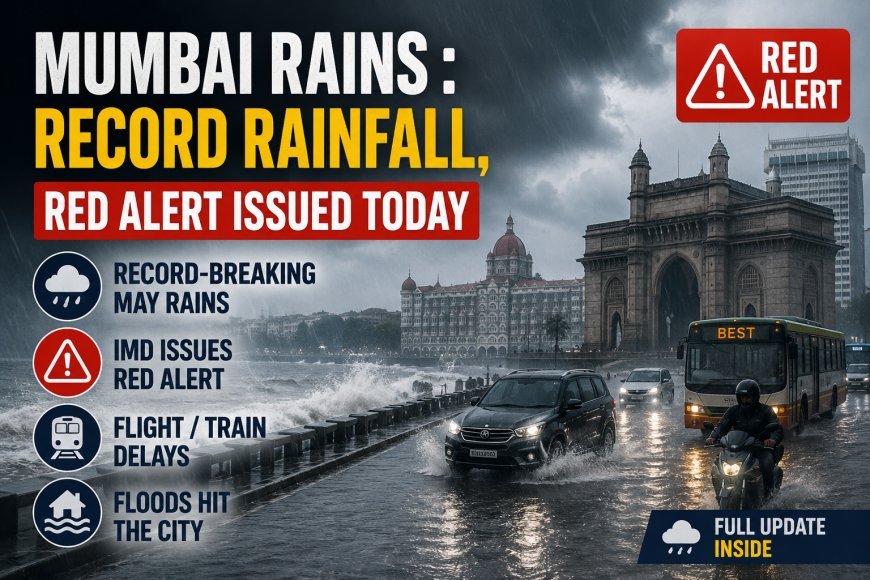
# Mumbai Rain Fury: Record-Breaking Downpour Brings the City to a Standstill
Mumbai woke up to a day unlike any other as relentless rainfall swept across the city, flooding roads, disrupting transportation networks, and forcing thousands of residents to alter their daily routines. What began as a spell of heavy rain quickly escalated into one of the most significant weather events the city has experienced in recent years, leaving authorities scrambling to respond and citizens struggling to navigate waterlogged streets.
For Mumbaikars, monsoon challenges are nothing new. Every year, the city prepares itself for intense showers, overflowing drains, and traffic congestion. However, this latest spell of rain felt different. The intensity, speed, and scale of the downpour caught many people off guard, turning ordinary roads into streams and transforming familiar neighborhoods into scenes resembling flood zones.
## Rainfall Records Shattered Across Mumbai
The sheer volume of rain that fell within a short period stunned both residents and weather experts. Several areas witnessed exceptionally heavy precipitation, overwhelming drainage systems and causing widespread water accumulation.
Meteorologists reported that parts of South Mumbai experienced rainfall levels rarely seen during the month of May. The unprecedented weather event highlighted how rapidly changing atmospheric conditions can create extreme weather situations even before the official monsoon season fully settles over the region.
In several neighborhoods, residents watched helplessly as streets disappeared beneath rising water. Vehicles became stranded, pedestrians searched for safer routes, and businesses faced disruptions as rainwater entered commercial establishments.
The intensity of the rainfall also raised concerns about urban infrastructure. Experts have long warned that highly populated cities with aging drainage systems remain vulnerable when rainfall exceeds expected levels within a short timeframe.
## A City Under a Red Alert
As conditions worsened, weather authorities issued a Red Alert, urging residents to remain cautious and avoid unnecessary travel. Such alerts are reserved for situations where extremely heavy rainfall is expected and where public safety could be at risk.
For many families, the alert served as a reminder to stay indoors whenever possible. Schools, offices, and businesses closely monitored official updates while residents relied on weather forecasts and social media for real-time information.
The atmosphere across the city shifted quickly. What began as routine rain evolved into a situation requiring heightened awareness. Emergency services increased their readiness, local authorities monitored vulnerable locations, and citizens prepared for the possibility of prolonged disruptions.
In coastal cities like Mumbai, heavy rainfall often creates a chain reaction. Waterlogging affects traffic movement, which then impacts emergency services, public transportation, and daily economic activity. This interconnected nature of urban infrastructure means that even a few hours of intense rain can affect millions of people.
## Roads Turn Into Rivers
Some of Mumbai’s busiest areas experienced severe flooding as water accumulated faster than drainage systems could remove it. Residents reported knee-deep water in several locations, while commuters found themselves stranded during peak travel hours.
Traffic movement slowed dramatically as motorists struggled to navigate flooded roads. In some areas, vehicles were forced to stop entirely due to rising water levels. Long traffic queues formed across key routes, adding to commuter frustration.
For those traveling on foot, conditions were equally challenging. People carefully navigated flooded pathways while attempting to avoid open drains and hidden obstacles beneath the water.
Many local businesses also faced difficulties. Shops located in low-lying areas reported water entering their premises, forcing temporary closures and causing concerns about property damage.
## Impact on Hospitals and Essential Services
Heavy rainfall does more than disrupt transportation—it can also place additional pressure on essential services.
Hospitals, emergency care facilities, and healthcare workers faced difficult conditions as patients attempted to access medical assistance despite flooded roads. Delays in transportation created challenges for both staff and visitors.
Healthcare facilities often operate under immense pressure during severe weather events. Maintaining uninterrupted services while managing infrastructure challenges becomes a critical priority for administrators and emergency teams.
Power supply systems, communication networks, and utility services also remain vulnerable during extreme rainfall events. Authorities continuously monitor these sectors to minimize disruptions and maintain public safety.
## Air Travel Faces Major Challenges
Air travelers encountered significant delays as adverse weather conditions affected airport operations. Heavy rainfall reduced visibility and complicated aircraft movement, leading to schedule adjustments throughout the day.
Passengers arriving at the airport faced uncertainty regarding departures and arrivals. Long queues formed at service counters as travelers sought updates on flight schedules and alternative arrangements.
For many visitors and business travelers, the disruptions created additional complications, including missed connections and extended waiting periods.
Airports operate according to strict safety protocols during severe weather. While delays can be frustrating, aviation experts emphasize that safety considerations must always remain the top priority.
## Rail and Metro Services Under Pressure
Mumbai’s local train network serves as the lifeline of the city, carrying millions of passengers every day. During periods of intense rainfall, however, even this robust transportation system can face operational difficulties.
Water accumulation near tracks and station areas created delays across certain routes, affecting daily commuters who rely heavily on rail transportation.
Metro services also experienced operational challenges in affected areas. Technical issues and weather-related disruptions forced authorities to adjust schedules and monitor infrastructure conditions closely.
For commuters, these disruptions highlighted how dependent the city remains on its public transportation systems. When rail services slow down, the effects are felt throughout Mumbai almost immediately.
## Emergency Teams Mobilize Across the City
As rainfall intensified, emergency response teams increased their presence across affected areas. Personnel worked around the clock to clear blocked drains, assist stranded residents, and monitor locations vulnerable to flooding.
Response efforts focused on minimizing risks to public safety while ensuring that critical services remained operational. Coordination between multiple agencies played an important role in addressing rapidly changing ground conditions.
Rescue teams remained on standby in locations identified as high-risk zones. Authorities also continued issuing advisories to help residents make informed decisions about travel and safety precautions.
Community support became another important aspect of the response. Local residents assisted neighbors, sharedinformation, and helped those facing difficulties navigating flooded areas.
## Growing Concerns About Climate Extremes
Beyond the immediate disruption, the rainfall event has reignited conversations about climate variability and urban preparedness.
Weather experts around the world have observed an increase in the frequency of extreme weather events, including intense rainfall episodes, heatwaves, and severe storms. While individual events cannot always be directly attributed to broader climate trends, many scientists agree that changing environmental conditions are influencing weather patterns.
Cities like Mumbai face unique challenges because of their dense populations, coastal geography, and extensive infrastructure requirements. Preparing for future weather extremes will require continued investment in drainage systems, flood management strategies, and climate resilience measures.
The latest rainfall event serves as a reminder that urban planning and disaster preparedness must evolve alongside changing environmental realities.
## What Residents Should Do During Heavy Rainfall
Safety remains the highest priority during periods of extreme weather. Residents are encouraged to:
* Follow official weather advisories and alerts.
* Avoid unnecessary travel during heavy rainfall.
* Stay away from flooded roads and underpasses.
* Keep emergency contact numbers readily available.
* Charge mobile devices and maintain backup power sources.
* Monitor transportation updates before beginning any journey.
* Assist vulnerable family members, neighbors, and community members when safe to do so.
Simple precautions can significantly reduce risks during severe weather conditions.
## Final Thoughts
Mumbai has always demonstrated remarkable resilience in the face of adversity, and this rainfall event is no exception. While flooded streets, transportation disruptions, and safety concerns created significant challenges, the response from emergency teams, local authorities, and residents once again showcased the city’s ability to adapt under pressure.
The record-breaking rainfall will undoubtedly be remembered as one of the most notable weather events of the year. More importantly, it serves as a reminder of the importance of preparedness, infrastructure resilience, and community cooperation during extreme weather situations.
As the city continues to recover and monitor weather developments, residents are encouraged to remain cautious, stay informed, and prioritize safety above all else.
Stay safe, Mumbai. Let’s weather this together.