

Pakistan Earthquake: 4.6 Magnitude Hits, No Major Damage
A 4.6-magnitude earthquake struck Pakistan on May 12, 2025, at 1:26 PM IST. No damage reported. Learn about recent quakes and safety tips in this seismic hotspot.
 Utej
Utej
The Ground Never Really Stops Moving: Pakistan's Earthquake Crisis in 2025
There are parts of the world where the earth shakes regularly — not as a news event, but as a lived reality. Where people have learned, generation by generation, to register a tremor the way others register a passing truck: with a momentary pause, a check of the ceiling, and then a quiet return to whatever they were doing.
Pakistan is one of those places. And in early May 2025, in the span of just four days, it was reminded of that fact three times.
On 10 May, two earthquakes hit in quick succession — a 5.7-magnitude tremor in the morning, followed by a 4.0-magnitude aftershock later that day. Residents in Islamabad, Peshawar, Swat, and Abbottabad felt the ground shift beneath them. Furniture moved. Ceilings cracked in older buildings. People ran into the streets. On social media, someone from Islamabad posted: "Two earthquakes in one day. We felt the tremors — it was terrifying." No reported casualties. But no one slept particularly well that night either.
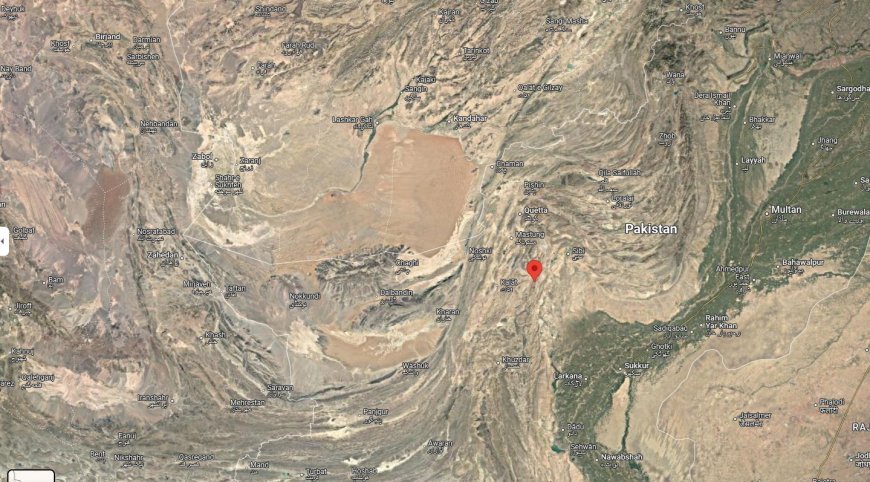
Then, on 12 May at 1:26 PM local time, a third earthquake hit. This one measured 4.6 on the Richter scale, its epicentre placed at 29.12°N, 67.26°E, at a shallow depth of just 10 kilometres. The National Center for Seismology logged it and posted the coordinates on X. And somewhere in Balochistan or Khyber Pakhtunkhwa, people looked up from whatever they were doing and felt, once again, that brief, unmistakable shudder through the floor.
Three earthquakes in four days. No major casualties. No collapsed buildings in the news. But the pattern itself — the relentlessness of it, the way the tremors keep arriving without announcement — deserves attention beyond the brief wire report. Because what May 2025 illustrated is not just a geological event. It is a preview of something larger that Pakistan knows is eventually coming, and a mirror held up to how ready — or not — the country is for it.
Why Pakistan Shakes: The Geology That Cannot Be Changed
Before anything else, it helps to understand why Pakistan is the way it is — seismically speaking — because the answer is written into the ground itself.
Pakistan sits at one of the most geologically active convergence zones on the planet. Three of the world's major tectonic plates — the Indian Plate, the Eurasian Plate, and the Arabian Plate — meet here. The Indian Plate is moving northward at roughly 40 millimetres per year, grinding against and sliding beneath the Eurasian Plate. That collision has been ongoing for tens of millions of years. It is what built the Himalayas and the Hindu Kush. It is also what makes the ground in Pakistan, Afghanistan, and the surrounding region tremble.
The Hindu Kush region — that rugged mountain corridor running through northeastern Afghanistan and into northwestern Pakistan — is arguably the most seismically complex zone in Asia. It experiences over 100 recorded earthquakes annually, many of them deep-focus events that can be felt hundreds of kilometres away. When seismologists talk about "frequent seismic activity" in Pakistan, they are not using diplomatic language. They mean it literally.
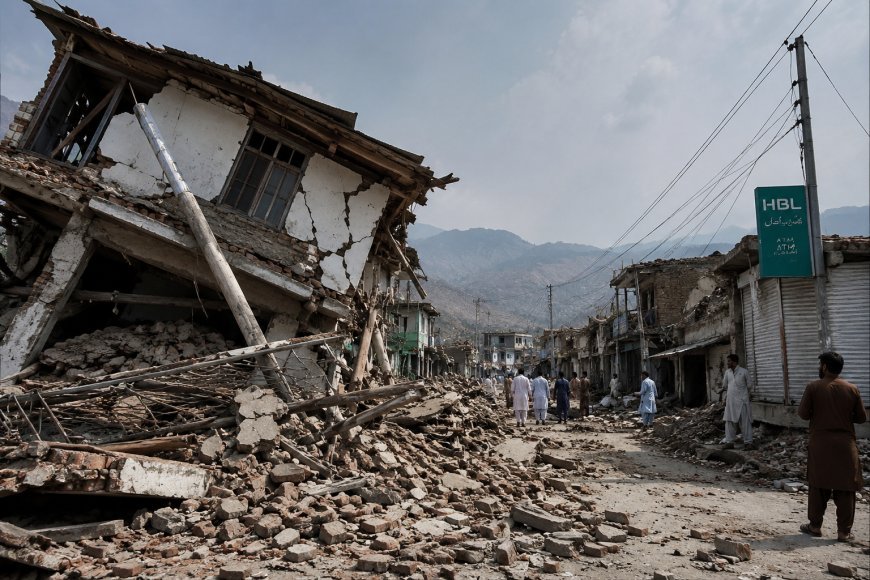
The May 2025 tremors were consistent with this pattern. The NCS confirmed that the Hindu Kush region, where the Indian and Eurasian tectonic plates collide, is prone to frequent earthquakes due to the build-up and release of tectonic energy. The 4.6-magnitude quake on 12 May struck at a depth of just 10 kilometres. That shallow depth matters — it is the difference between an earthquake that dissipates its energy deep underground and one that delivers its full force directly to the surface. Shallow earthquakes, even at moderate magnitudes, cause significantly stronger shaking than deeper ones of equivalent size. In areas where buildings are old, densely packed, or poorly constructed, a shallow 4.6 is not a mild event.
The Historical Weight Behind Every Tremor
Every time Pakistan's ground shakes, there is a shadow of history behind it. And that history is devastating.
On 8 October 2005, a magnitude 7.6 earthquake struck the Kashmir region of northern Pakistan. The official death toll reached at least 79,000 people in Pakistan, with additional casualties reported in India and Afghanistan. Entire towns like Balakot were destroyed. Massive landslides left roads impassable for weeks. Around 3.5 million people were left homeless, and the economic damage was equivalent to 2.6% of Pakistan's entire GDP in that year. It was one of the deadliest natural disasters in South Asia's modern history.
Go back further and the record is equally grim. In 1935, a magnitude 7.7 earthquake struck Quetta in Balochistan, killing between 30,000 and 60,000 people — levelling the city entirely. In 2023, an earthquake in Harnai district of Balochistan killed more than 20 people. The pattern is consistent: earthquakes arrive without warning, and when buildings are not built to absorb them, people die.
2025 alone has already seen a magnitude 5.7 earthquake strike Pakistan on 10 May, quakes of magnitude 5.6 and 5.8 hit the Hindu Kush and Afghanistan-Tajikistan border regions in April, a magnitude 5 earthquake in April, and several moderate tremors hitting Karachi in March and June. This is not an unusual year seismically. This is what the calendar in a high-risk zone looks like.
The Problem That Goes Deeper Than the Fault Lines
Here is the hard truth about earthquake disasters: the earthquake rarely kills people by itself. It is the building that collapses on top of them.
Pakistan's building stock consists of about two-thirds brick masonry construction, with only 8% of buildings using reinforced concrete — making Pakistan far more vulnerable to earthquakes than countries such as Cyprus, Iran, and Armenia that have similar levels of exposure to seismic hazards. Brick masonry, in its traditional form, is essentially rigid and brittle. When the ground shakes, it does not flex — it fractures. Walls shear. Roofs pancake downward. The people inside have no warning and no time.
Local building regulations, or bylaws, rarely adhere to building codes, and even in areas with more robust bylaws, enforcement is problematic. This is not unique to Pakistan — it is a pattern seen across earthquake-prone developing nations — but it carries particularly heavy consequences in a country where seismic risk is as high as it is here. When building standards are aspirational rather than enforced, every moderate earthquake carries the potential to become a mass-casualty event.
The World Bank has estimated that if the 2005 earthquake were to occur today with the current built environment, it could cause nearly twice as much damage in residential property losses alone — approximately $2.8 billion. Two decades after the worst earthquake in Pakistan's modern history, the physical vulnerability of the country's housing stock has not meaningfully improved. If anything, rapid urbanisation has made things worse: cities that were small towns in 2005 are now densely packed with new construction that often pays no attention to seismic standards.
"Preparedness has improved, but vulnerabilities persist," says Dr. Iqbal Ahmed, a seismologist based in Islamabad. "We cannot prevent earthquakes, but we can reduce their impact through better planning and resilient construction." That sentence has been true for twenty years. The question is when it will be acted upon seriously enough to matter.
What the 2025 Tremors Actually Showed
The May 2025 series of earthquakes — the 5.7, the 4.0, and the 4.6 — were not disasters. No one died. No major structures collapsed. Life returned to normal within hours.
But that relative quietness should not be mistaken for safety. What the events actually demonstrated was how relentlessly active this seismic zone is. 2025 alone has already seen a magnitude 5.7 earthquake strike Pakistan in May, magnitude 5.6 and 5.8 quakes in the Hindu Kush in April, a magnitude 5 tremor on April 12, and repeated moderate tremors hitting Karachi. The sequence in early May — three notable quakes in four days — reflects the way energy accumulates and releases along these fault systems. Small releases can be signs of a system actively cycling through stress. They can also be foreshocks to something larger. The honest answer is that seismologists cannot tell the difference in advance.
The Pakistan Meteorological Department and the Provincial Disaster Management Authorities are monitoring — that much is confirmed. Social media, particularly X, lit up with the hashtag #PakistanEarthquake2025 after each event, reflecting genuine public anxiety. People in Islamabad and Peshawar who have lived through earlier quakes do not dismiss these tremors. They know what a bigger one looks like. They remember.
The Gap Between Monitoring and Preparedness
There is an important distinction that gets lost in the news cycle around events like these: the difference between monitoring earthquakes and being prepared for them.
Monitoring — tracking seismic activity, logging events, issuing early reports — is something Pakistan's institutions do reasonably well. The NCS and PMD post data quickly. The PDMA issues advisories. Information flows.
Preparedness is something else entirely. It means the building on the corner of your street was constructed to absorb lateral shaking and will not bury its occupants when the ground moves. It means hospitals — the very buildings that need to function most urgently in a disaster — are built to remain standing when everything around them is falling. It means schoolchildren have practised what to do in an earthquake enough times that the muscle memory kicks in before panic does. It means emergency response teams are positioned and equipped before the event, not assembled in the chaos of its aftermath.
Pakistan has developed legal, policy, and institutional frameworks for disaster risk management since 2005, including the establishment of the NDMA, PDMAs, and DDMAs at sub-national levels. That architecture exists. But the physical reality of the built environment — the two-thirds of buildings made of unreinforced brick masonry, the housing estates that went up without inspections, the informal settlements in landslide-prone valleys — has not been transformed by institutional frameworks alone.
Experts have consistently recommended a three-pronged approach: structural retrofitting of existing high-risk buildings (especially schools and hospitals), stronger enforcement of building codes for new construction, and genuine public education about earthquake behaviour. The third element is the cheapest and arguably the most immediately impactful. Knowing to drop, cover, and hold on — knowing not to run outside into falling debris — knowing to check gas lines after a tremor — these behaviours save lives. They require nothing more than consistent community-level campaigns.
What People Living With Seismic Risk Actually Need
There is a tendency, in writing about earthquakes in countries like Pakistan, to focus on the geological and institutional scale while losing sight of the human one. But earthquakes are experienced by individuals — by the family who hears the rumbling before the shaking starts, by the mother who grabs her children and runs for the doorframe, by the elderly man in a brick-walled room in a village in Balochistan who has survived three major quakes and knows exactly how fast a ceiling can come down.
For ordinary people living in seismically active parts of Pakistan, the practical needs are specific and manageable. Understanding the difference between a tremor that is passing through and one that is building — the latter will keep intensifying after the first jolt, while the former fades. Knowing the structural weak points of your own home: unreinforced brick, flat concrete slab roofs, rooms on upper floors of narrow buildings. Keeping basic supplies — water, first aid, a torch, a whistle — somewhere accessible and known to every member of the household.
Apps like BhooKamp offer real-time earthquake alerts, giving people seconds of warning that, used correctly, can mean the difference between being under a falling object and being away from one. Seconds matter when structures begin to fail.
A Final Word: The Quiet Emergency
May 2025 passed without disaster. The tremors came and went. Buildings stood. People went back to their lives.
But the geological forces that produced those tremors are ongoing. The Indian Plate is still pressing northward. The Hindu Kush fault system is still cycling through stress and release. Somewhere in that system — perhaps this year, perhaps in a decade, perhaps in a generation — there is a larger event waiting. History is unambiguous on this point.
What Pakistan does in the years between now and then — in building codes, in retrofitting, in public education, in institutional preparation — will determine how many people survive it. The earthquakes themselves cannot be prevented. The casualties can be reduced. The question is whether the urgency of the small tremors is enough to prompt the large-scale preparation that has been needed since at least 2005.
The ground is sending a message. The task is to listen before it speaks at full volume.