
11,223 Startups Shut Down in India in 2025 - The Harsh Truth Behind the Correction
Over 11,000 Indian startups shut down in 2025, marking a 30% rise from last year. Discover why this isn’t a crisis but a necessary correction driving profitability and sustainable growth in India’s startup ecosystem.
 uday
uday
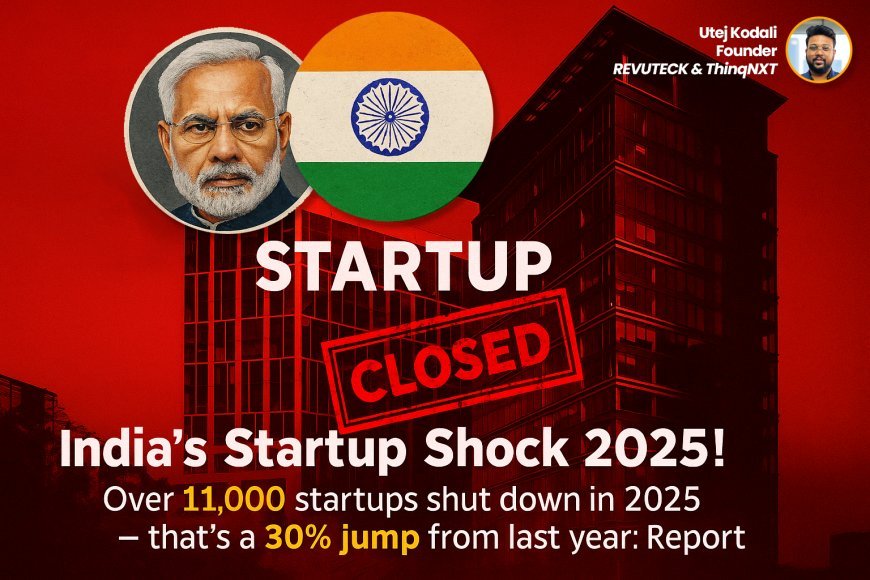
In 2025 alone, over 11,000 Indian startups have shut down, marking nearly a 30% rise compared to last year. At first glance, this may seem alarming—like the ecosystem is in trouble. But if you look closer, it tells a different story.
This isn’t a collapse. It’s a correction the startup ecosystem needed.
A Shift Backed by Data
The numbers highlight a clear transition:
- 2023: 15,921 shutdowns
- 2024: 12,717 shutdowns
- 2025 (till October): 11,223 closures
In just two years, more than 28,000 startups have shut down. To put that into perspective, between 2019 and 2022, only around 2,300 startups closed. That’s a massive jump.
Certain sectors—like EdTech, AgriTech, FinTech, and HealthTech—have been hit the hardest. Meanwhile, areas such as DeepTech, SaaS, and AI-driven B2B startups are quietly gaining strength.
What’s Really Happening?
The roots of this shift go back to the 2021–2022 funding boom.
During that period:
- Venture capital was easy to access
- Startups raised funds at inflated valuations
- Growth became the top priority—often at the cost of sustainability
Founders focused heavily on metrics like user growth and GMV, while profitability took a backseat.
Then came 2023, bringing a funding slowdown. Rising global interest rates and cautious investors changed the game. Suddenly, startups were expected to prove their business models—not just their growth potential.
By 2025, the market has entered a reset phase. Only startups with strong fundamentals, real demand, and a clear path to profitability are surviving.
Why Did So Many Startups Fail?
Several common patterns explain the wave of shutdowns:
1. Excessive Spending
Many startups burned cash aggressively on marketing, discounts, and expansion without a plan for long-term profitability.
2. Lack of Product-Market Fit
Scaling too early without validating demand proved costly. If customers don’t truly need your product, growth won’t sustain.
3. Overvaluation Issues
Startups that raised funds at extremely high valuations struggled to justify them when growth slowed.
4. Weak Unit Economics
A fundamental mistake: spending more to acquire customers than they generate in value. When CAC exceeds LTV, the model breaks.
Changing Market Dynamics
The broader ecosystem reflects this correction:
Startup Formation Decline:
- 2019–2022: ~9,600 startups per year
- 2024: 5,264
- 2025 (Q1): Just 125
Fewer Acquisitions:
- 2021: 248 deals
- 2024: 131 deals
This indicates a clear trend—consolidation. While fewer startups are being launched, the ones that survive are stronger and more disciplined.
What Works in 2025?
The rules of the game have changed.
Investors now prioritize sustainability:
- Seed funding requires early traction
- Series A demands proven product-market fit
- Series B expects a clear path to profitability
Founders are adapting:
- Cutting unnecessary costs
- Prioritizing customer retention over acquisition
- Moving from volatile B2C models to stable B2B revenue streams
High-performing sectors include:
- DeepTech
- AI
- B2B SaaS
- Logistics
These areas solve real problems and generate predictable, recurring revenue.
Continued Support from the Government
Despite the shakeout, institutional support remains strong:
- Over 1.59 lakh startups recognized under Startup India
- Around ₹10,000 crore deployed through the Fund of Funds
This ensures that early-stage innovation still has backing.
Key Lessons for Founders
Focus on real metrics
Vanity metrics like downloads and followers may look impressive, but they don’t sustain a business.
Be cautious with valuations
Overvaluation can become a burden in future funding rounds. Sustainable growth matters more than hype.
Strengthen fundamentals
Keep a close eye on unit economics. A healthy LTV-to-CAC ratio is critical for survival.
Think long-term
Quick exits are no longer common. Investors now favor businesses built for long-term growth and resilience.