

Ashoka University Lecturer Ali Khan Mahmudabad Granted Bail
Delhi High Court grants interim bail to Ashoka University lecturer Ali Khan Mahmudabad after his arrest for a social media post on women armed forces officers.
 Utej
Utej
# A Facebook Post, an Arrest, and the Questions Everyone Is Talking About in India
On 7 May 2025, India launched Operation Sindoor — a military strike targeting nine terror camps in Pakistan and Pakistan-administered Kashmir, carried out in the early hours of the morning in direct retaliation for the Pahalgam attack that had killed 26 civilians two weeks earlier. The country was on edge. Emotions were running high. The press briefings were watched by millions.
Two of the faces leading those briefings became instantly, unexpectedly iconic: Colonel Sofiya Qureshi and Wing Commander Vyomika Singh, both women officers of the Indian armed forces, As they stood beside Foreign Secretary Vikram Misri to brief the country on a military operation, many people viewed their presence as a powerful representation of the armed forces’ diversity and capability. Social media filled with praise for both officers. The moment was celebrated widely.
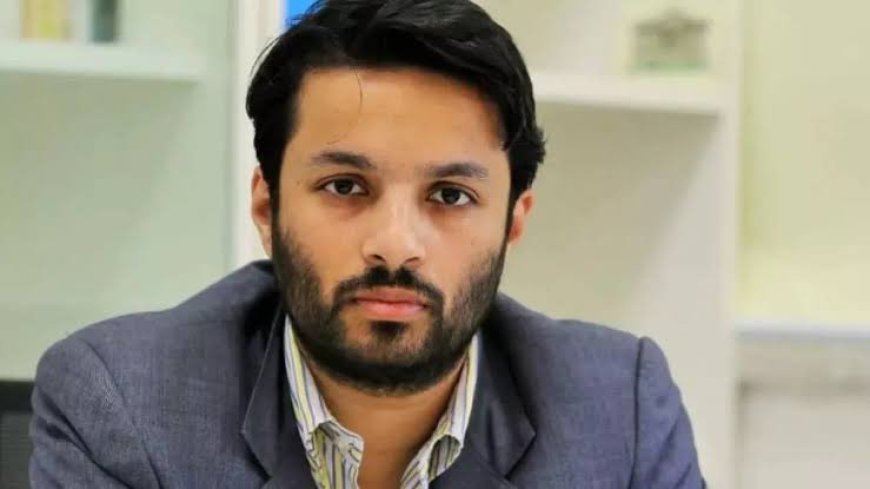
And then Ali Khan Mahmudabad, an associate professor and head of the Political Science department at Ashoka University in Sonipat, wrote a Facebook post about it.
Ten days later, he was under arrest. And India found itself in the middle of a debate that cut right to the heart of what free expression actually means in a democracy, what the boundaries of academic commentary are, and whether a society at a moment of national tension can hear a complicated thought without treating it as a threat.
## Who Is Ali Khan Mahmudabad?
Before getting into what happened, it is worth understanding who this man is — because context matters, and his background is directly relevant to how his words were written and how they were read.
Ali Khan Mahmudabad is a Cambridge-educated scholar. He is not a social media provocateur or a political commentator looking for controversy. He is an academic whose work focuses on Muslim political thought, South Asian history, Urdu literary culture, and the relationship between religion and political identity in India. He has published serious academic work. He teaches serious students at one of India's most respected liberal arts institutions.
He is also a Muslim, and that fact sits uncomfortably in the middle of this story — because it is impossible to understand how his post was received, and by whom, without acknowledging it.
He describes himself as someone committed to constitutional values, to the unity and integrity of India, and to honest intellectual engagement with difficult questions. His supporters — and there are many — describe him as exactly the kind of voice that a healthy democracy needs: willing to say things that are true but uncomfortable, in a time when the comfortable thing is to say nothing at all.
## The Post That Started Everything
On 8 May 2025 — the day after Operation Sindoor began — Mahmudabad posted on Facebook. The post was not long. It was not inflammatory in tone. But it said something that landed, in the climate of that moment, like a stone thrown into a glass room.
He wrote that he was "very happy" to see right-wing commentators applauding Colonel Sofiya Qureshi's appearance at the press briefing. And then he made an ask: that those same people who were applauding Qureshi — a Muslim woman officer in the Indian army — should "equally loudly demand" that the victims of mob lynchings, arbitrary property demolitions, and what he described as the BJP's hate-mongering be protected as Indian citizens.
He then added that the "optics of two women soldiers presenting their findings" was important — but that "optics must translate to reality on the ground, otherwise it's just hypocrisy."
He ended the post with "Jai Hind."
That is the post. Read it plainly, without the filter of the political climate it landed in, and what you see is a scholar making a pointed but recognisable argument: that symbolic inclusion — putting Muslim or women officers at a press conference — is meaningful but insufficient unless accompanied by structural change in how minorities and women are actually treated in Indian public life. It is the kind of argument that appears regularly in academic journals, political commentary, and civil society discourse.
What he did not anticipate — or perhaps underestimated — was how it would be read by people who were not approaching it as political analysis.
## The Complaint and the Women's Commission
The reaction was swift and came from multiple directions simultaneously.
The Haryana State Commission for Women took suo motu cognisance of Mahmudabad's posts on 12 May — four days after the original post. Their notice stated that a review of his social media output revealed concerns including the "disparaging of women in uniform, including Colonel Sofiya Qureshi and Wing Commander Vyomika Singh, undermining their role as professional officers in the Indian Armed Forces."
The complaint also alleged that his posts misrepresented facts through repeated references to "genocide," "dehumanisation," and "hypocrisy," and attributed malicious intent to the Indian government.
Mahmudabad responded publicly on 14 May, before his arrest. He was direct and composed. He said the Commission had "misread and misunderstood" his posts "to such an extent that they have inverted their meaning." He stated clearly: "My post highlighted the significance of the armed forces choosing Colonel Sofia Qureshi and Wing Commander Vyomika Singh for the briefing, seeing it as a reflection of the ideals envisioned by the Republic’s founders.— of an India united in its diversity — remains very much alive."
He denied any misogynistic intent with equal clarity: "There is nothing remotely misogynistic about my comments that could be construed as anti-women." He stated that his entire comment was intended to emphasize protecting the lives of both citizens and soldiers. He also pointed out that the post concluded with the words “Jai Hind.”
The Commission was not persuaded. Neither, it appeared, were others. A complaint was also filed by a BJP Yuva Morcha leader. A village sarpanch filed a second FIR. Two separate First Information Reports were registered at the Rai police station in Sonipat, alleging that hissocial mediaposts endangered the sovereignty and integrity of the country.
On 18 May 2025 — ten days after the original post — Haryana Police arrested Ali Khan Mahmudabad from Delhi.
## The Charges and What They Actually Mean
The charges filed against Mahmudabad were not minor. He was booked under sections of the Bharatiya Nyaya Sanhita relating to acts prejudicial to maintaining communal harmony, incitement of armed rebellion or subversive activities, and insults of religious beliefs. Earlier reports also cited sections of the IT Act.
These are serious provisions. They carry serious consequences. And their application to a Facebook post by a political science professor — a post that ended with "Jai Hind" — immediately raised questions in the academic and legal community.
The Jawaharlal Nehru University Teachers' Association (JNUTA) was among the first to respond formally, calling the arrest "wholly unwarranted" and expressing outrage that Haryana Police had acted on what it described as a complaint by "a leader of the ruling party." The JNUTA statement noted that the Haryana Women's Commission had "acted way beyond its jurisdiction" in taking suo motu cognisance of the posts in the first place.
An open letter signed by over 1,200 people — academics, professors, former civil servants, and public intellectuals — expressed support for Mahmudabad and called his arrest "harassment" and "attempted censorship."
His lawyer Kapil Sibal — one of India's most senior legal minds — put the question bluntly during the bail hearing: "Where is the criminal intent? The post ends with Jai Hind."
It was not a rhetorical question. It was a genuine legal challenge. And it pointed to the central problem with this case: the gap between what the post actually said and what it was alleged to mean.
---
## Two Days of Custody, a Remand, and the Supreme Court
After his arrest on 18 May, Mahmudabad was placed in two-day police remand. When that expired on 20 May, police sought an extension of seven days. His lawyers opposed the extension. The court in Sonipat sent him to judicial custody till 27 May instead.
On 21 May, the Supreme Court stepped in.
A bench comprising Justices Surya Kant and N. Kotiswar Singh ordered his immediate release on interim bail. The conditions were firm — he was required to surrender his passport, he was barred from writing any articles, online posts, or delivering speeches related to the case, and he was specifically prohibited from commenting on the Pahalgam attack or Operation Sindoor.
The Supreme Court also ordered the Haryana Director General of Police to constitute a three-member Special Investigation Team within 24 hours, headed by an Inspector General rank officer and including a Superintendent of Police rank woman officer, to investigate the matter afresh.
The bail was a relief. But the Supreme Court's language around it was not an unqualified vindication. The bench criticised Mahmudabad's "choice of words" and suggested, in remarks from the bench, that the post had been made "deliberately to insult, humiliate or cause discomfort." The court also questioned the timing and intent, suggesting it sought "cheap popularity."
These observations — made verbally, from the bench, without detailed written reasoning to support them — themselves became a subject of discussion. The Supreme Court Observer, a respected legal journal, noted in a careful analysis that the 400-word bail order contained no explanation of which specific words had caused the alleged harm. When the Additional Solicitor General was asked to identify the words that "insulted the modesty of a woman," the response was vague — some reference to Mahmudabad's observation that the "optics of two women soldiers must translate to reality on the ground" — before quickly moving on.
The court, in other words, granted bail while maintaining an official distance from endorsing the post — a position that left both sides partially unsatisfied and the underlying legal questions entirely unresolved.
## Ashoka University: Walking the Institutional Tightrope
Throughout the sequence of events, Ashoka University found itself in a position that universities frequently find themselves in when faculty members become politically controversial: trying to support an individual while avoiding an institutional posture that could invite further pressure.
The Faculty Association was direct in its condemnation, calling the charges baseless and defending Mahmudabad's right to academic expression. But the university's official statement was more measured — reaffirming its commitment to academic freedom while also reminding faculty of the importance of adhering to the institution's social media guidelines.
When the bail was granted, the university's response was warmer: "We are relieved and heartened by professor Ali Khan Mahmudabad being granted interim bail by the Hon'ble Supreme Court. It has provided great comfort to his family and all of us at Ashoka University."
Ashoka's position throughout reflected the genuine difficulty institutions face. Speak too loudly in defence of a faculty member and the institution becomes a target. Stay too quiet and you fail the individual who needed support. The university chose a path somewhere in the middle — one that kept lines of communication open with the legal process while not abandoning Mahmudabad entirely.
---
## Where the Case Went After Bail
Following the interim bail, the legal process continued to grind forward.
The SIT was constituted and began its investigation. Mahmudabad cooperated, as the bail conditions required. In subsequent hearings, the Supreme Court bench also relaxed some of the conditions — allowing him to write posts and articles and express opinions generally, with the restriction confined specifically to the sub judice case itself. This was a meaningful distinction: a blanket silence on Indian political discourse was lifted; what remained was a narrower restriction tied directly to the ongoing proceedings.
Haryana Police submitted a closure report for one of the two FIRs — a significant development that suggested investigators had found the evidence in at least one complaint insufficient to proceed. The second case remained active.
As of the most recent hearings, the Supreme Court had indicated that the SIT cannot frame charges against Mahmudabad until the next scheduled court date. The case continues, slowly, with no final resolution yet in sight.
---
## The Question Nobody Can Agree On
There are two ways to read this case, and reasonable people genuinely disagree about which reading is correct.
The first reading is this: India was in the middle of its most intense military confrontation in decades. Soldiers were fighting. Civilians had been killed. National morale was fragile and national unity was being tested. In that context, a prominent academic at a prestigious institution used a moment of national pride — the visible presence of women officers at a military briefing — to pivot to a critique of the government's treatment of Muslims. Whatever his intent, the effect was to inject communal politics into a moment when the country was trying to come together. The charges may have been broad, but the complaint was legitimate: not every moment is the right moment for every argument.
The second reading is this: precisely because India was in a tense moment, the space for honest critical commentary was contracting. The charges brought against Mahmudabad — endangering national sovereignty and integrity, inciting armed rebellion — were wildly disproportionate to a Facebook post that ended with "Jai Hind." The use of those charges against academic commentary, on the basis of complaints from a ruling party youth leader and a state commission that arguably had no jurisdiction, represents exactly the kind of legal overreach that chills public discourse. If academics cannot make pointed political arguments — particularly ones that challenge the gap between stated values and lived reality — then the university classroom becomes pointless.
Both readings contain truth. And that is precisely why this case has not resolved cleanly in the court of public opinion, even as it slowly moves through the courts of law.
---
## What This Case Means for Everyone Watching
The Ali Khan Mahmudabad case is not really about one professor and one Facebook post. It is about the relationship between institutional authority and individual expression in a democracy under pressure.
India is not unique in facing this tension. Governments around the world — democratic ones included — tend to narrow the definition of acceptable speech during national security moments. The instinct is understandable. The problem is that "national security moment" can expand to cover almost anything if the legal tools are broad enough and the political will to use them is strong enough.
What makes this case particularly significant is who Mahmudabad is and where he works. He is not an anonymous social media user. He is a Cambridge-educated professor at one of India's most respected universities, with a long track record of serious scholarship. If someone with his credentials, platform, and institutional backing can be arrested over a Facebook post for two days before the Supreme Court intervenes — the question of what that means for ordinary Indians who have fewer resources and less visibility is not a comfortable one.
The 1,200 people who signed the open letter in his support understood this. The JNUTA understood it. The Supreme Court, in the careful language of its bail conditions and its reluctance to fully endorse the arrest even while facilitating release, perhaps understood it too.
Academic freedom is not a luxury. It is the condition under which knowledge is actually produced. Universities are places where uncomfortable ideas are supposed to be heard, tested, challenged, and refined — not places where the range of expressible thought is determined by whoever filed the last complaint. When that stops being true, what remains is not a university. It is a training academy with better architecture.
---
## A Final Word
Ali Khan Mahmudabad wrote a post that ended with "Jai Hind." He is still navigating the legal consequences of it.
Whatever the courts ultimately decide about the specific charges — and the process has already produced more questions than answers — the case has already left a mark. On how academics think about what they can safely say. On how institutions think about what they can safely defend. On how the rest of us think about what the phrase "freedom of expression" actually guarantees in a democracy when the temperature is high.
A healthy democracy is not one where everyone agrees. It is one where disagreement — even sharp, pointed, badly-timed disagreement — does not end in handcuffs. Whether India, in this case and in others like it, is living up to that standard is the question this story keeps insisting we answer.