

India Conducts First Nationwide Mock Drill Since 1971 War
India conducts its first nationwide civil defence mock drill since 1971 to prepare for war-like scenarios, focusing on air raid alerts, blackouts, and evacuations amid rising tensions with Pakistan.
 Utej
Utej
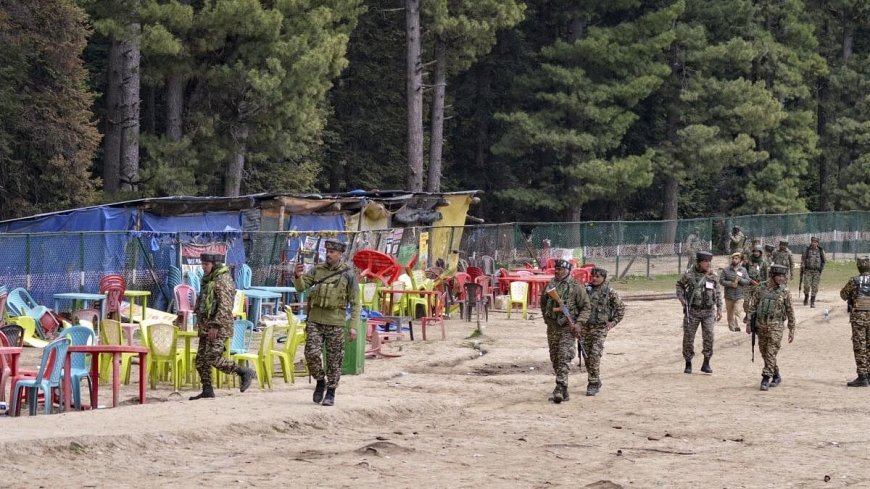
The Sirens Sounded Across India: The Story Behind the Country's First Civil Defence Drill in 54 Years
At exactly 4:00 PM on 7 May 2025, sirens began to wail across Mumbai.
Not one siren. Not the kind of single alert that sounds when a fire engine is approaching or a factory shift is ending. Dozens of air raid warning sirens, sounding simultaneously across roughly 60 areas of India's most densely populated city, filling the afternoon air with a sound that most people alive in India today had never heard before in their lives. Within moments, pockets of the city went dark — a five-minute power blackout, controlled and planned, but eerie nonetheless. People on the streets looked up. Some reached for their phones. Others stood still, processing what was happening around them.
Eight hundred kilometres away in Delhi, the same sirens were sounding at 55 locations across all 11 districts of the capital. In Chandigarh, the blackout drill began at 7:30 PM and ran for ten minutes — the city's lights extinguishing and then, minutes later, returning. In schools in Amritsar, Ferozepur, and Pathankot — border towns in Punjab where the sound of geopolitical tension is never entirely theoretical — students and teachers practiced what to do when the world outside stops being predictable.
This was Operation Abhyaas. India's first nationwide civil defence drill since 1971. Across 244 districts, from metropolitan cores to villages. Organised by the Ministry of Home Affairs, coordinated by the National Disaster Management Authority, and named with characteristic military brevity — Abhyaas means practice, or rehearsal. It was many things at once: a test of infrastructure, a message to Pakistan, a reality check for a country that had spent 54 years hoping it would never need to do this again.
The Gap: Why 54 Years Passed Without a Drill Like This
To understand the significance of what happened on 7 May 2025, you have to understand what the 54-year gap actually means.
India last conducted a nationwide civil defence drill in 1971 — the year of the war that resulted in the creation of Bangladesh, the year India and Pakistan fought their most consequential conventional conflict. In the decades that followed, the drills that had been a feature of wartime India — the air raid practices, the blackout procedures, the civilian training on how to respond to aerial attacks — gradually faded. They became the province of official documents and institutional memory rather than lived practice. The infrastructure of civil defence wardens, siren networks, and emergency communication chains was maintained on paper but rarely tested at scale.
There were reasons for this that went beyond complacency. The post-1971 period produced the Simla Agreement, which created a framework for bilateral management of India-Pakistan relations. The nuclear tests of 1998 by both countries introduced a deterrence dimension that made large-scale conventional war less likely, even as they made the stakes of any conflict vastly higher. The logic that had sustained civil defence culture in the mid-20th century — the idea that a conventional air war over Indian cities was a real and imminent possibility — seemed, for most of five decades, less urgent.
And then came the Pahalgam attack on 22 April 2025 — 26 civilians killed in a targeted terror strike in Jammu and Kashmir — and the weeks that followed. The intelligence assessments. The diplomatic signals. The military preparations that anyone paying attention could see being made. The Ministry of Home Affairs issued its directive on 2 May. The drill would happen on 7 May.
The timing of the announcement and the date of the drill were not coincidental. India was telling its population something, and the government wanted them to understand it clearly: this is not a hypothetical.
Who Ran It and How: The Scale of Operation Abhyaas
The mechanics of Operation Abhyaas were genuinely impressive in their scope, even before considering what the drill was meant to simulate.
The 244 districts involved were divided into three categories — reflecting different levels of proximity to borders, strategic importance, and population density. Each district had a district controller responsible for coordinating local implementation. Working under those controllers were civil defence wardens, Home Guards, National Cadet Corps cadets, National Service Scheme volunteers, Nehru Yuva Kendra Sangathan members, and students from schools and colleges. This was not a military exercise that happened to have civilians watching. It was a civilian exercise that happened to have military coordination as its backbone.
In Delhi, the Directorate of Education directed all school principals to organise disaster response training sessions for students and teachers. Operation Abhyaas was running at 55 locations across the capital simultaneously — simulating air raids, fires, and evacuations in a city of over 30 million people. The drill tested the operationalisation of hotline and radio communication links with the Indian Air Force — the real-time connections that would need to function in an actual emergency — as well as the functionality of control rooms and the effectiveness of air raid warning systems.
Vivek Srivastava, Director General of Fire Services, Civil Defence, and Home Guards, spoke to Akashvani News before the drill began. His message was careful and deliberate: "Common people should not be alarmed. It is a preparatory exercise and they should cooperate with the volunteers. It is an exercise to prepare people to counter any external threat." That reassurance was necessary, because the activities themselves — sirens, blackouts, evacuations — are inherently alarming to populations that have no frame of reference for them.
The specific elements tested across the 244 districts were: the activation and audibility range of air raid warning sirens; crash blackout procedures — the speed at which visible lights could be extinguished to prevent detection; early camouflaging of vital installations including power stations, communication towers, and critical infrastructure; the coordination between civilian district officials and military communication channels; the responsiveness of emergency medical and fire services; and the behavioural response of civilian populations to instructions given in an emergency.
That last element — how ordinary people actually behave when the sirens sound — is perhaps the most important and the most difficult to assess outside a real event.
City by City: What People Actually Experienced
The lived experience of Operation Abhyaas differed significantly depending on where you were in India on 7 May 2025.
In Mumbai, the 4 PM sirens were the most dramatic element. The megacity's density meant that the sound carried across vast distances, and the five-minute blackout in 60 areas produced a visual effect that residents described as genuinely disorienting. People who had been going about their afternoon — at markets, in offices, picking up children from school — found themselves in the middle of a simulation that was viscerally different from an earthquake drill or a fire exit exercise. The sirens sounded like something from a film about the Second World War. That was intentional.
In Delhi, the 55-location drill was visible across the city simultaneously, creating a citywide sense of unusual activity. Schools had already prepared their students — the training sessions the Directorate of Education had mandated meant that for many children, the drill was not a surprise but a culmination of what they had spent the morning learning. Emergency services ran through their coordination protocols. Civil defence wardens walked their assigned areas.
In Chandigarh, the evening timing of the blackout — 7:30 PM to 7:40 PM — meant it happened after dark, making the sudden absence of lights more immediate and more unsettling than a daytime simulation would have been. The ten minutes of darkness, followed by the return of light, was described by residents as feeling "more real than I expected."
In the border districts of Punjab — Amritsar, Ferozepur, Gurdaspur, Pathankot, Tarn Taran — the drill carried a weight that it did not carry in cities further from the frontier. Schools in these towns had been temporarily closed as a precautionary measure amid heightened India-Pakistan tensions. Residents in Amritsar, whose city sits less than 30 kilometres from the Pakistani border, did not need to be told that the exercise was serious. They had grown up with the awareness of proximity that people in other parts of India carry more abstractly.
In Lucknow, air raid siren tests at the Police Lines had been conducted in rehearsal the day before — partly to check equipment function, partly to give residents advance notice that the sounds they would hear were not an emergency. This phased communication — warning people that an exercise was happening before the exercise happened — was a consistent feature of how the drill was managed, designed to prevent the kind of panic that unannounced sirens could produce.
The Human Reaction: Surreal, Necessary, Overdue
The public response to Operation Abhyaas was, in aggregate, more composed than previous generations might have expected from a population encountering these sounds and scenarios for the first time.
Some initial confusion was inevitable. People who had not read the public advisories circulated the previous day by state governments had no prior context for what they were hearing. In some areas, social media briefly filled with anxious questions from people who had not been informed — "Is this real? What is happening?" — before the reassurance that it was an exercise spread through the same channels.
The dominant response, once the context was clear, was more reflective than anxious. People shared their experiences on local news channels and social platforms, describing the drill as feeling "surreal but important." Several commentators drew comparisons to the civil defence culture of Israel, where routine security drills are part of the national fabric from childhood. Others referenced South Korea, where proximity to the North means that emergency preparedness has never fully faded from public consciousness. The implicit question in these comparisons was: why had India let this lapse for 54 years?
The answer is complicated and has to do with the particular psychology of a nation that fought a devastating partition, then multiple wars, and then spent subsequent decades building a peace — however fragile and incomplete — that allowed civil society to focus on development rather than defence. The infrastructure of civil preparedness is psychologically expensive to maintain. It requires a population to hold in mind the possibility of something terrible, even while going about the business of ordinary life. Societies often let it lapse until something forces them to rebuild it.
The Pahalgam attack was that forcing event. And the drill, for all its practical purposes, was also a kind of national reckoning — an acknowledgment that the peace had been, at least temporarily, disrupted, and that the systems built to protect people in extreme circumstances needed to be tested before they were needed rather than discovered to be inadequate after.
The Infrastructure Behind the Sirens
The siren networks tested in Operation Abhyaas are part of a civil defence infrastructure that India has maintained, in various states of repair, since Independence. The Civil Defence Rules of 1968 — the legal framework under which Operation Abhyaas was conducted — established the formal structure for civil defence districts, controllers, and wardens.
In practice, this infrastructure had atrophied in many parts of the country. Sirens that had not been tested regularly may not function at full audibility. Communication protocols between district controllers and the Indian Air Force that existed on paper had not been rehearsed in decades for many districts. The control rooms that are supposed to function as coordination hubs in an emergency had, in many cases, not been tested under realistic conditions.
Operation Abhyaas was designed specifically to identify these gaps — to discover, in a controlled exercise, which sirens did not work, which communication links were broken, which evacuation plans had become outdated, and which personnel did not know their roles. Finding these failures in a drill is manageable. Finding them during an actual emergency is potentially catastrophic.
The drill also tested an updated dimension of civil defence that the 1971 precedent did not include: digital communication. SMS alerts, PA systems connected to mobile networks, social media advisories — the information infrastructure of a 2025 emergency response is categorically different from what existed during the last nationwide drill. Operation Abhyaas evaluated whether these modern channels could function under the pressure of a large-scale emergency, and whether the messages sent through them reached people quickly enough to be useful.
The coordination between civil defence and the Indian Air Force was one of the most technically significant elements. The hotline and radio communication links between district controllers and IAF operations were tested for functionality and response time. In an actual aerial threat scenario, the time between the IAF detecting an incoming threat and civilians in affected cities receiving a siren alert could be measured in minutes. The drill established a baseline for how well those minutes could be used.
What Operation Abhyaas Said to the World
Beyond its practical purposes, Operation Abhyaas was a message — and it was read as one, both domestically and internationally.
Within India, the drill communicated that the government was treating the post-Pahalgam period as genuinely serious — not just diplomatically serious, but serious enough to activate wartime protocols that had not been used in over half a century. For citizens in border states, it was confirmation of what they already felt. For citizens in cities further from the frontier, it was an introduction to a level of urgency that had previously felt abstract.
Externally, conducting a nationwide civil defence drill on the same day that India was preparing Operation Sindoor was not coincidental. The timing communicated readiness and resolve to Pakistan — the message that India was not only capable of military action but was simultaneously preparing its civilian population for the possibility of sustained conflict. Civil defence drills of this scale are what states do when they believe conflict is a genuine rather than theoretical possibility.
Whether that communication was part of the deterrence calculus or simply the practical result of parallel preparations happening simultaneously is impossible to determine from outside the decision-making process. Both things can be true at once: the drill was genuinely needed as a readiness exercise, and its timing on the day of Operation Sindoor made it a statement as well as a test.
What Comes After: Building a Culture of Preparedness
One drill in 54 years is not a civil defence culture. It is a beginning.
The genuine challenge India faces in the aftermath of Operation Abhyaas is institutional and cultural: how to maintain a level of civil preparedness that does not require a crisis to activate. The Israeli model — where security consciousness is woven into the educational curriculum, where civilians know what to do when sirens sound because they have practiced it repeatedly throughout their lives — did not happen automatically. It was built, deliberately and consistently, over decades.
India has the institutional framework. The Civil Defence Rules exist. The district controller structure exists. The siren networks exist, though some need repair. The coordination protocols with the Indian Air Force exist. What has been missing is regular activation — the regular testing that keeps these systems functional and keeps civilian knowledge current.
Experts expect that Operation Abhyaas will not remain a one-time event. The government's language around national security preparedness in 2025 suggests a renewed commitment to making civil defence exercises a regular feature of national life — monthly or quarterly in high-risk districts, annually across the broader national network. If that commitment is maintained, the drill of 7 May 2025 will be remembered not as the return of an old practice but as the beginning of a new one.
A Final Word
At 4:05 PM on 7 May 2025, in Mumbai, the sirens stopped.
The lights came back on. People who had paused resumed what they had been doing. The five minutes of simulated emergency ended, and the city returned to its regular afternoon noise. Children in schools went back to their lessons. Shopkeepers reopened their doors. The street resumed its rhythm.
But something had shifted. A generation of Indians had heard, for the first time, the sound of an air raid siren in their own city. They had experienced, briefly and safely, what it means for the lights to go out by design rather than accident. They had been asked to remember that the peace they live inside is not self-maintaining — that it is held in place by systems and people and preparations that require attention even when nothing is obviously wrong.
Operation Abhyaas was code-named practice. What it was practising for, everyone hoped, would never actually come. But the country had spent 54 years assuming it would not need to practice. On 7 May 2025, it decided that assumption was no longer one it could afford to make.