

India-Pakistan Tension Escalates : A Hybrid Warfare is on Rise
India's response to a terrorist attack escalates into a hybrid conflict with Pakistan, involving air, sea, and digital strategies, including social media censorship.
 Utej
Utej
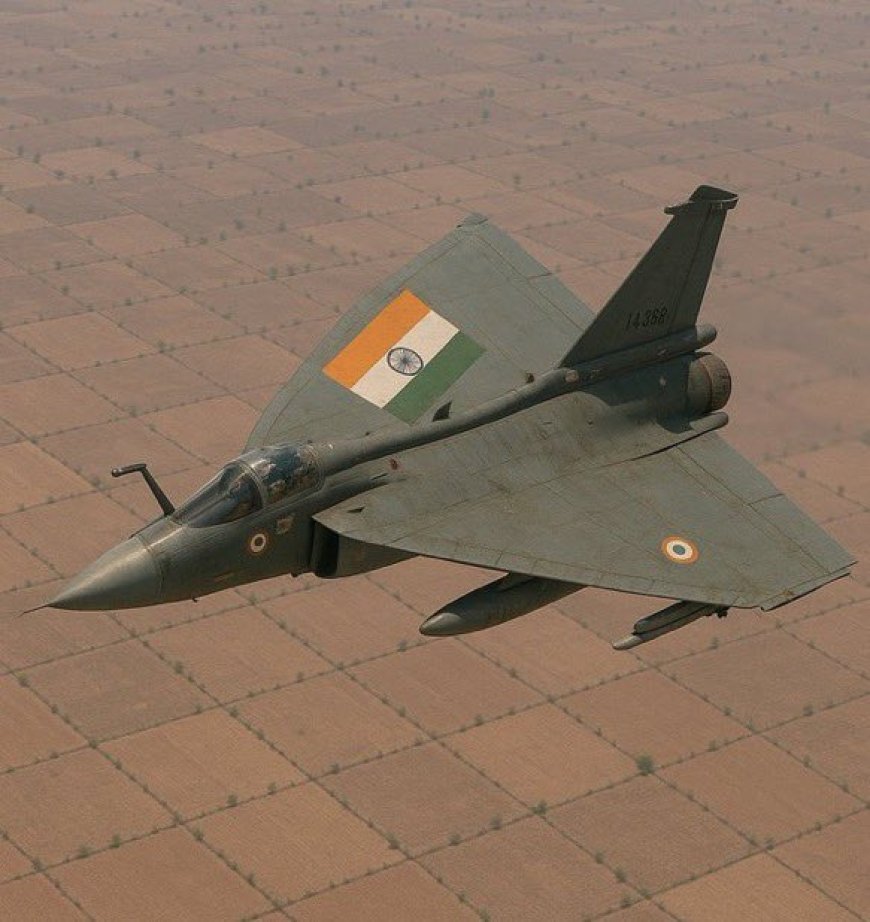
How India Responded Across Military, Diplomatic, and Information Fronts in May 2025
At 1:05 AM on 7 May 2025, something changed.
Not with an announcement. Not with a formal declaration. With a statement from the Press Information Bureau — a few terse sentences, released in the middle of the night — that confirmed what India had just done. At that hour, while most of the country was asleep, the Indian Armed Forces had launched a coordinated, tri-service military offensive into Pakistan and Pakistan-administered Kashmir. Nine terrorist infrastructure sites, gone within a 25-minute window. Operation Sindoor had begun.
By 1:30 AM, it was over — the kinetic part, at least. What followed was not silence but escalation: drones in the sky over Chandigarh, warships moving in the Arabian Sea, 8,000 accounts blocked on X, disinformation spreading faster than any missile, and a country of 1.4 billion people reaching for their phones to understand what was happening to them.
This is the story of how India fought three wars simultaneously in May 2025 — in the air, at sea, and online — and what that experience reveals about the nature of modern conflict.
The Trigger: 22 April and What Happened in Pahalgam
The story really begins on 22 April 2025, when a tragic incident took place in the Baisaran meadow near Pahalgam in Jammu and Kashmir.
Terrorists stormed a tourist area. They asked people to state their religion. Those who were Hindu were shot. Twenty-six civilians died — tourists, most of them, people on holiday in one of the most scenic corners of India. It was described by the government as one of the deadliest terrorist attacks in India since the 2008 Mumbai attacks. The attack bore the hallmarks of The Resistance Front, a shadow group linked to Pakistan-based Lashkar-e-Taiba, with documented connections to Pakistan's ISI.
India mourned. Then India planned.
The two weeks between 22 April and 7 May were a period of visible, deliberate preparation — diplomatic channels hardening, military assets repositioning, intelligence assessments being made about targets. The government's framing, repeated consistently in those two weeks, was specific: India would respond to the attack, the response would be targeted at terror infrastructure, and it would not seek to expand into a full-scale war.
The name chosen for the operation — Sindoor, the red powder worn by married women — was not accidental. Many of the 26 dead in Pahalgam were men. Their wives were widowed in minutes. The name was a statement about grief, about retribution, and about what India was doing and why.
How Three Armed Services Executed a Swift 25-Minute Mission
At 1:05 AM on 7 May, the Air Force led the initial strikes — precision hits on nine terrorist infrastructure sites in Pakistan and Pakistan-occupied Jammu and Kashmir. The Navy simultaneously restricted Pakistani naval movement in the Arabian Sea. The Army maintained full readiness along the Line of Control.
India described the action with specific, chosen language: "focused, measured, and non-escalatory." The Ministry of External Affairs statement was careful and deliberate. Indian Foreign Secretary Vikram Misri stated the operation aimed at "dismantling terrorist infrastructure and disabling terrorists likely to be sent across to India." This was, as analysts have since noted, the most explicit articulation of Indian deterrence doctrine in decades — the clearest statement yet that state-backed terrorism would be met with punitive military force rather than merely diplomatic protest.
The war that followed lasted 88 hours. It involved unprecedented strikes on Pakistani territory, counter-air battles, aerial-drone duels, naval maneuvers, and disinformation campaigns. It was fought by two nuclear-armed nations who had been in various states of conflict since their partition in 1947. And it was fought, for the first time in their long history of confrontation, across dimensions that the planners of previous India-Pakistan wars could not have imagined.
During the operation, India's electronic warfare capabilities reportedly helped weaken parts of Pakistan's air defense system. Meanwhile, locally developed platforms such as the Akash missile system were used to stop incoming drones and other aerial threats. In the days that followed, continued exchanges between the two sides reportedly caused substantial damage to sections of Pakistan's air force infrastructure.
The strikes went deeper into Pakistani territory than any previous Indian military action. India hit targets in Pakistan's Punjab province — a significant escalation from the 2019 Balakot strike, which had targeted Khyber Pakhtunkhwa. This was not a symbolic show of force along the border. This was a strike at infrastructure connected to the political and military heartland of Pakistan. The signal was deliberate and unmistakable: India's reach had expanded, and its willingness to use that reach had crossed a threshold it had not crossed before.
The Night the Sirens Started
By the evening of 8 May — the day after the initial strikes — the conflict had evolved in a direction that brought it into the lives of ordinary Indian citizens in a way that previous India-Pakistan confrontations had not.
Residents of Chandigarh and Patiala were alerted by air raid sirens, while people living close to the border were asked to stay safe and seek shelter. The skies lit up with drone interceptions — Pakistan had responded to India's strikes with waves of UAVs and drones targeting Indian civilian and military areas. The S-400 missile defense system, India's most advanced air defense platform, was actively engaged. The Akash missile system intercepted retaliatory projectiles. It was a genuine emergency, not a simulation designed for preparedness it was real-time air defense in the skies over Indian cities.
Even after the ceasefire was agreed at 1700 hours IST on 10 May, waves of UAVs and small drones intruded into Indian civilian and military areas. These were successfully intercepted. All field commanders were authorized to take appropriate action in case of any ceasefire violation.
The drone dimension of this conflict was genuinely new in the India-Pakistan context. Previous confrontations had involved artillery, air force exchanges, and ground operations. The May 2025 conflict introduced the era of drone warfare between the two countries — cheap, expendable, difficult to intercept in large numbers, capable of being launched in swarms that overwhelmed point-defense systems. The fact that some of these drones targeted religious sites — temples and gurudwaras — was not incidental. It was a deliberate attempt to inflame communal sentiment and provoke public anger in a way that would pressure the Indian government to escalate.
That escalation did not happen. But the choice to hold back while drones flew over Indian cities required a discipline in the political and military leadership that should not be taken for granted.
The Sea: India's Third Front
While the air war dominated the news cycle, a quieter but strategically significant dimension of the conflict was unfolding in the Arabian Sea.
The Indian Navy launched overnight operations in response to intelligence indicating potential seaborne threats. Warships were deployed. Maritime patrols were intensified to a degree not seen since the Kargil conflict of 1999. The Navy reportedly restricted Pakistani naval movement throughout the conflict period.
The Arabian Sea front mattered for reasons beyond the immediate conflict. Pakistan's primary port — Karachi — sits on the Arabian Sea. Its naval assets, its commercial shipping, its access to imported goods and fuel: all of it flows through that water. An Indian naval presence capable of controlling movement in the Arabian Sea was not merely defensive — it was a statement of strategic leverage. India was not just fighting back on the ground and in the air. It was demonstrating that it could, if it chose to, create economic pressure on Pakistan through maritime dominance.
No major naval engagement occurred. But the deployment was noted — by Pakistan, by China, and by every navy that monitors the Indian Ocean region. It represented the clearest demonstration yet that India's tri-service coordination had matured to the point where all three arms of its military could be meaningfully deployed simultaneously in a conflict that was, in its origins, about terrorism in a landlocked valley.
The Digital War: 8,000 Accounts and a Battle for Reality
And then there was the war nobody could see — except on their phones.
Within hours of Operation Sindoor's launch, social media became a battlefield in a way that surprised even observers who had been watching India-Pakistan information dynamics for years. Following the commencement of Operation Sindoor, India found itself targeted by an aggressive disinformation campaign launched from Pakistan — full of lies and misinformation aimed at distorting the truth, misleading the global public, and reclaiming lost narrative ground through a storm of fabricated content.
The tactics were not subtle. Old videos from unrelated conflicts were recirculated as "proof" of Indian casualties. Fabricated casualty numbers were posted by accounts with large followings and shared thousands of times before fact-checkers could respond. Images from Syria, Gaza, and the 2019 India-Pakistan confrontation were relabeled and redistributed. Some accounts claimed Indian Air Force jets had been shot down — a claim Pakistan formally made, without presenting verifiable evidence — and the assertion spread virally through networks that did not stop to verify it.
India's response operated on two levels. At the institutional level, the government instructed X (formerly Twitter) to block over 8,000 accounts deemed to be spreading disinformation and cross-border propaganda. Among those withheld in India was X's own Global Affairs account — a move that raised immediate concerns about the platform's relationship with government censorship and that provoked a direct but ultimately acquiescent response from Elon Musk's company, which complied with the order while the global version remained operational.
The blocking was controversial. Critics — both inside India and internationally — argued it constituted censorship that went beyond national security necessity, suppressing legitimate criticism alongside actual disinformation. Press freedom organisations noted that determining which of 8,000 accounts constituted genuine security threats and which were simply critical voices was not a distinction the order appeared to carefully make.
Defenders of the move argued that in an active conflict, the spread of fabricated information about military operations — false claims about casualties, fake evidence of nuclear escalation, manufactured footage designed to inflame public anger — constituted a genuine threat to public order that justified emergency action. The debate about where that line falls is not one this conflict resolved.
At the operational level, India took a composed and methodical approach to information warfare: communicating Operation Sindoor's effectiveness with precision rather than sensationalism, exposing the manipulation tactics used by Pakistan-based accounts, and engaging proactively with international media to ensure accurate framing of the conflict's origins and objectives.
The press briefings led by Colonel Sofiya Qureshi and Wing Commander Vyomika Singh — the two women officers who became the public face of India's military communication during the conflict — were a deliberate part of this strategy. Calm, precise, and authoritative, they presented the military's narrative in a form that was difficult to misrepresent. The contrast between their measured communication and the chaotic disinformation being spread online was itself a form of information warfare: demonstrating institutional competence in the face of manufactured chaos.
The Ceasefire and What It Left Behind
Fighting intensified sharply late on 9 May. The United States and other observers feared rapid escalation and lobbied for a ceasefire. Pakistan's Director General of Military Operations called his Indian counterpart. It was agreed that all firing and military action on land, in the air, and at sea would stop at 1700 hours IST on 10 May.
The 88-hour war established several precedents. India affirmed it can fight a conventional war without crossing the nuclear threshold through "non-contact" warfare. The strikes went into Pakistan's Punjab province — a qualitative escalation that established what analysts now call India's "new red line": state-backed terrorism will be met with punitive military force, and the geography of that response is not constrained to the Line of Control.
The ceasefire held, but not cleanly. Drones continued to intrude after the official cessation of hostilities. Border skirmishes were reported. The digital war continued long after the kinetic conflict paused — disinformation, counter-disinformation, leaked military footage, and contested claims about who had won, what had been destroyed, and what the numbers actually were.
Schools in vulnerable border districts remained closed. Daily military briefings continued. India maintained a state of heightened readiness even as diplomatic channels reopened. The conditions of an uneasy peace are not the same as the conditions of genuine peace.
What India Learned: The Lessons Written in Real Time
The May 2025 conflict taught India several things about the nature of modern warfare — some reassuring, some challenging.
On the reassuring side: the tri-service coordination worked. The Air Force, Navy, and Army operated as a genuinely integrated force in a way that India's previous conflicts had not fully demonstrated. The precision strike capability was real and effective. The air defense systems — S-400 and Akash — performed. The digital communication strategy, while imperfect, was more coherent than in previous crises.
On the challenging side: the information war was harder than the military war. Several analyses highlighted India's struggle to effectively manage the information space and counter Pakistani disinformation during and after the operation. The speed at which false information spread — and the way it spread across platforms that operate across borders without a single government's jurisdiction — meant that even effective counter-messaging arrived too late for large sections of the audience.
The US intervention in brokering the ceasefire raised uncomfortable questions about India's diplomatic autonomy. This unusual diplomatic intervention raised significant questions about India's diplomatic agency and its ability to manage the conflict independently — suggesting a perceived inability to control the escalation, or reflecting the US' assertive mediation role in the region. For a country that has long positioned itself as a strategic autonomous actor, not beholden to any great power's framework, having Washington's intervention be the decisive factor in ending the conflict was a complicated lesson.
And the two-front challenge — China and Pakistan — was written more clearly into India's strategic planning after May 2025 than before it. India's electronic warfare systems reportedly jammed Pakistan's Chinese-supplied air defense network — a direct engagement, however indirect, with Chinese military technology in the field. The lesson was not lost on analysts in New Delhi: any future conflict with Pakistan would have a Beijing dimension that required its own preparation.
A New Blueprint for How Nations Fight
Step back from the specific events and a larger pattern becomes visible.
The May 2025 India-Pakistan conflict was not conventional warfare. It was not the massed tank formations of 1971, not the infantry battles of Kargil. It was something different — a compressed, multi-domain conflict that lasted less than four days but engaged every dimension of national power simultaneously: military force, naval pressure, electronic warfare, diplomatic positioning, and a digital information battle fought across platforms that operate without borders.
This is what modern hybrid warfare looks like. And India, for all its challenges and imperfections in managing it, fought it as a country that had thought seriously about what that means. The tri-service coordination, the precision strikes, the naval deployment, the digital communication strategy — all of it reflected a military and government that had absorbed the lessons of contemporary conflict and tried to apply them.
The information war is not going away. The drone dimension is not going away. The requirement to fight simultaneously on platforms measured in kilometres and platforms measured in clicks is not going away. If anything, it will intensify as technology cheapens drones, as social media algorithms amplify the fastest content regardless of its accuracy, and as adversaries learn what worked and refine it.
India's experience in May 2025 is a case study — still being written, still being analyzed — in what it means to fight a conflict where the battlefield is everywhere at once.
A Final Word
Somewhere in India, on the morning of 11 May, a family that had spent three nights taking shelter from air raid sirens made their children breakfast and sent them back to school.
The sirens had stopped. The drones were being intercepted rather than overhead. The ceasefire was holding, more or less. The phones still buzzed with notifications — claims and counter-claims about who had won, what had been lost, what came next — but the immediate fear had passed.
That ordinary morning, in thousands of homes near the border and millions more across the country, was what the conflict had been fought to protect. Not a strategic doctrine. Not a deterrence posture. Not a place in the international order. Just the ability to make breakfast and send children to school without wondering if the lights would go out and the sirens would start.