

India Strikes Back: Operation Sindoor Hits Terror Camps
India launches Operation Sindoor, a precision strike on terror camps in Pakistan after the Pahalgam attack, escalating Indo-Pak tensions.
 Utej
Utej
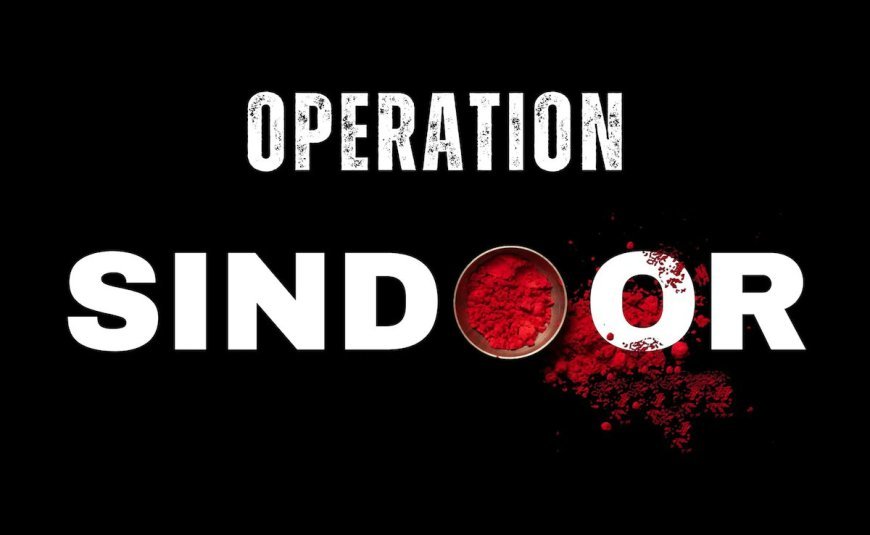
Operation Sindoor: What Actually Happened in Those 25 Minutes — and Why the World Is Still Processing It
At midnight on 6 May 2025, twelve Rafale jets and eight Sukhoi-30 MKIs belonging to the Indian Air Force's Western Air Command began moving into position. They were armed. They were not crossing into Pakistani airspace. And they were about to do something India had not done since 1971.
Twenty-five minutes later, nine terror sites in Pakistan and Pakistan-administered Kashmir had been destroyed.
At 1:44 AM on 7 May, the Ministry of Defence released a statement. The language was careful, precise, and stripped of any triumphalism: "The Indian Armed Forces launched 'Operation Sindoor', targeting terrorist infrastructure in Pakistan and Pakistan-occupied Jammu and Kashmir from where terrorist attacks against India have been planned and directed. Our actions have been focused, measured, and non-escalatory in nature. No Pakistani military facilities have been targeted."
By the time most of India woke up that morning, the operation was over. What began was something more complicated: the reckoning with what had just happened, what it meant, and where it left a subcontinent of two nuclear-armed nations that had just exchanged fire for the first time in decades.
April 22: The Attack That Made It Inevitable
To understand why India moved the way it did, you have to start with what happened in Pahalgam on 22 April 2025.
The Baisaran meadow is one of the most photographed places in Jammu and Kashmir — a high-altitude valley of extraordinary natural beauty that has been drawing tourists and pilgrims for generations. On the afternoon of 22 April, terrorists entered that meadow and did something that became the defining atrocity of the year: they asked people to state their religion. Those who were Hindu were shot. Twenty-six civilians died. Over forty more were injured.
The attack was claimed by The Resistance Front, a shadow group widely identified as an offshoot of Lashkar-e-Taiba, the Pakistan-based militant organisation. The specificity of the targeting — the deliberate selection of Hindu civilians in a Muslim-majority region — was not random. It was designed to inflame communal tension in India, to test India's restraint, and to signal that the apparatus of cross-border terrorism remained operational and willing to escalate.
India's intelligence agencies had been tracking the connections between the attackers, the TRF, and Pakistani intelligence infrastructure for years. Over the twelve days between the Pahalgam attack and Operation Sindoor, RAW and ISRO's satellite imagery identified nine specific sites across Bahawalpur, Muridke, Sialkot, Muzaffarabad, Kotli, Gulpur, Bhimber, Chak Amru, and Bagh — locations that Indian intelligence assessed as active infrastructure for the planning, training, and financing of cross-border terrorism.
The decision to strike was made. The question was how.
The Weapons: What Was Used and Why It Mattered
Operation Sindoor was not a gunfight. It was a precision engineering problem, solved with weapons that had never been used in combat by India before at this scale.
The primary strike package was built around two systems of French origin, delivered from Rafale jets of No. 17 Squadron operating entirely within Indian airspace.
SCALP-EG cruise missiles — known internationally as Storm Shadow — are 250-kilometre-range standoff weapons equipped with an imaging infrared seeker and automatic target recognition algorithms. They fly at low altitude to avoid radar detection, approach their target from unpredictable angles, and penetrate hardened structures before detonating. Rafale jets from No. 17 Squadron launched at least ten SCALP-EG missiles during the operation. Crucially, the entire launch sequence happened from within Indian airspace — the pilots never entered Pakistani airspace, never exposed themselves to Pakistani surface-to-air missile systems, and maintained what defence analysts call "survivability through distance." The SCALP's range and accuracy meant the strike package could hit deep targets — including Bahawalpur in Pakistani Punjab, over 100 kilometres from the border — without any Indian aircraft crossing the Line of Control.
AASM Hammer bombs are GPS and infrared guided munitions — essentially smart bombs that combine the destructive capacity of a conventional payload with near-millimetre accuracy in terminal guidance. They were used for shorter-range targets in Pakistan-administered Kashmir, where the geometry required different strike profiles than the long-range standoff attacks on Pakistani Punjab.
BrahMos supersonic cruise missiles, launched from Sukhoi-30 MKI jets, added a third dimension to the strike package. The BrahMos travels at speeds up to Mach 3, giving targets essentially no reaction time between detection and impact. With accuracy described as achieving 0.1-metre precision, it was used against hardened facilities — specifically the Jaish-e-Mohammed base in Bahawalpur, which intelligence had identified as a high-value installation requiring guaranteed structural destruction.
SkyStriker loitering munitions — essentially kamikaze drones carrying 5-10 kilogram warheads — were deployed by the Army from mobile launchers to target command bunkers in Gulpur. These weapons circle overhead until they identify their designated target through AI-guided sensors, then dive and detonate, offering precision against small, dispersed, or concealed infrastructure that conventional missiles are less suited for.
The Navy's Boeing P-8 Poseidon maritime patrol aircraft contributed ground mapping and target acquisition along the frontier — the same aircraft used during India's 2020 standoff with China in the Himalayas, now repurposed for precision target intelligence in a different theatre.
The choice of weapons communicated something beyond military capability. Every system used was designed to minimise collateral damage while maximising structural destruction of the specific infrastructure targeted. This was not area bombardment. It was an argument, made in explosions and telemetry, that India knew exactly what it was hitting and was hitting only that.
The 25 Minutes: What Happened in Sequence
The operation unfolded in distinct phases across a 25-minute window that the IAF's Western Air Command, under Air Marshal Pankaj Mohan Sinha, had coordinated down to the second.
Between midnight and 12:45 AM, the pre-operation phase involved synchronised mobilisation. The twelve Rafales and eight Sukhoi-30s were armed and positioned. ISRO's RISAT-2B satellite was providing real-time imagery of the target sites. The Army's Northern Command, under Lt Gen MV Suchindra Kumar, deployed SkyStriker drone launchers to their forward positions. Navy P-8s were already airborne, feeding target acquisition data into the command network.
Between 12:45 AM and 1:04 AM, the first phase of strikes hit targets in Pakistan-administered Kashmir. Rafale jets flying at 10,000 feet launched SCALP missiles from 100 kilometres inside Indian airspace, targeting Kotli's Abbas Camp — a facility that Indian intelligence had identified as a suicide bomber training hub. SkyStriker drones struck Gulpur, targeting LeT command bunkers that were too distributed and concealed for missile strikes to guarantee destruction. ISRO's satellite imagery confirmed impact in real time.
Between 1:05 AM and 1:11 AM, the deepest strikes hit Pakistani territory. Rafale jets used AASM Hammer bombs to destroy Hizbul Mujahideen's camp in Sialkot. BrahMos missiles from Sukhoi-30s levelled the Jaish-e-Mohammed facility in Bahawalpur — the headquarters where, according to Indian intelligence, the Pahalgam attack had been planned. Colonel Sofiya Qureshi's subsequent briefing highlighted the elimination of high-value targets including Yusuf Azhar, a JeM operative listed in UN sanctions.
Between 1:11 AM and 1:30 AM, the final phase struck the most symbolically significant targets. Muridke's Markaz Taiba — the Lashkar-e-Taiba headquarters, the facility that trained the operatives responsible for the 2008 Mumbai attacks — was destroyed. The Muzaffarabad installations in Pakistani Kashmir were hit. The Markaz Taiba strike, in particular, carried weight beyond the immediate operation: this was infrastructure directly connected to the worst terrorist attack in India's history, and it had been standing for nearly two decades.
At 1:30 AM, the strike phase was complete. All Indian aircraft returned safely. According to the Indian Air Force, no Indian aircraft were lost. Pakistan claimed five jets had been shot down. No credible independent evidence supported the claim.
The Strategic Logic: Why This Was Different From 2019
India's previous significant cross-border military action — the Balakot airstrike of February 2019 — had struck Jaish-e-Mohammed's training facility in Khyber Pakhtunkhwa. It was significant. It was the first Indian airstrike on Pakistani territory since 1971. But it was also bounded — a single target, a single facility, designed to demonstrate capability rather than degrade infrastructure.
Operation Sindoor was categorically different in scale, depth, and specificity. Nine sites. Four inside Pakistani territory proper, including in Pakistani Punjab — the political and military heartland. The LeT headquarters. The JeM headquarters. The Hizbul Mujahideen camp. Active training facilities. Command and control nodes. The infrastructure that had enabled not just Pahalgam but years of cross-border attacks.
Former IAF Chief Air Chief Marshal VR Chaudhari (retd.) described it with unusual directness months after the operation: "The precision strikes on their primary bases forced them to wave the white flag. It was the first time that India went so deep and struck with absolute pinpoint accuracy."
The operational philosophy behind the strikes was equally significant. By conducting the entire operation from within Indian airspace — no pilot crossed into Pakistani territory — India preserved the technical ability to say its forces had not violated Pakistani airspace while simultaneously destroying targets deep inside Pakistani Punjab. This was not evasion of responsibility; India claimed full ownership of the strikes. It was a demonstration of a doctrine: that standoff precision weapons make territorial boundary-crossing unnecessary, that India can reach anywhere it needs to reach without triggering the escalatory logic that follows territorial violation.
The tri-service coordination was the other operational achievement. Air Force, Army, and Navy working simultaneously — the Navy providing maritime deterrence in the Arabian Sea and P-8 target acquisition support, the Army deploying SkyStriker drones, the Air Force executing the primary strike package — represented the most integrated joint operation India had conducted since 1971. The fact that the coordination worked, in real time, under combat conditions, against targets at varying distances with different weapon systems, was itself a validation of years of doctrinal and training evolution.
Pakistan's Air Bases: Phase Two
Operation Sindoor's initial 25-minute strike is the part most widely reported. What followed it is less commonly understood but equally important to the full picture.
Pakistan responded to the strikes with its own drone and missile attacks on Indian territory — targeting military installations including Udhampur, Pathankot, Adampur, and Bhuj. India's integrated air defence systems — the S-400, the Akash missile system — intercepted incoming threats. India's Defence Minister later told the Lok Sabha that none of India's important assets were destroyed in the Pakistani counter-attack, and that every incoming drone or missile was intercepted.
Then, on 9 and 10 May, India executed a second phase of strikes — this time against Pakistani air bases themselves. Rafiqui, Murid, Chaklala, Rahim Yar Khan, Sukkur, and Chunian were targeted using air-launched precision weapons. Technical infrastructure, command and control centres, radar sites, and weapon storage areas were hit. Runways were destroyed. Hangars were hit.
This was a qualitative escalation from the original counter-terrorism strikes. India was no longer hitting terrorist infrastructure. It was hitting the Pakistani military's own capacity to continue the exchange. The message was clear: Pakistan's retaliation had not deterred India. If anything, it had widened the target set.
Pakistan's Director General of Military Operations called his Indian counterpart on 10 May. The ceasefire request came from Pakistan's side. India agreed. The fighting stopped at 17:00 IST.
The Name and What It Meant
Operation Sindoor. The word deserves its own consideration, because the choice of name was not incidental.
Sindoor is the red powder worn by married Hindu women — applied to the parting of the hair as a mark of matrimonial status, a symbol of the bond between a woman and her husband. In the Pahalgam attack, many of the men killed were in exactly that relationship. Their wives were widowed in minutes. The sindoor they wore became, in the attack's immediate aftermath, a symbol of what had been destroyed.
Naming the retaliatory operation after that symbol was a deliberate act of communication — to the widows, to the nation, to Pakistan, and to the world. India was saying: we understand what was taken, we know who it was taken from, and this response is in their name. It was a framing that connected military action to human grief in a way that "Operation [strategic codename]" never could. It was not subtle. It was not trying to be.
The International Response: What the World Said and What It Meant
The international community's response to Operation Sindoor followed a pattern that India's foreign policy establishment had anticipated and prepared for.
The United Nations called for restraint and dialogue — the standard formulation that the Security Council reaches for whenever nuclear-armed nations exchange fire and no one wants to take sides explicitly. China expressed concern about regional instability and reiterated its support for de-escalation — language calibrated to support Pakistan without publicly condemning India in ways that would complicate Beijing's own relationship with New Delhi. The United States and European Union emphasised the right to fight terrorism while urging restraint against broader conflict — giving India the legitimacy of the counter-terrorism framing while pushing against escalation.
The United States' role evolved significantly as the conflict escalated beyond the initial strikes. When Indian strikes hit Pakistani air bases on 9-10 May and the possibility of nuclear escalation entered the calculus, Secretary of State Marco Rubio began active mediation. Vice President JD Vance had initially characterised the conflict as "not America's business." The subsequent 88-hour timeline that produced the ceasefire demonstrated that it became America's business quite quickly once the scale of the exchange became apparent.
What the international response collectively revealed is the structural asymmetry in how the world processes India-Pakistan conflict. India's position — that it was exercising the right to self-defence against state-sponsored terrorism — found genuine sympathy in capitals that had themselves dealt with cross-border terrorism. But the nuclear dimension overrides almost every other consideration when decisions are being made in foreign ministries around the world. The fear of escalation between two nuclear-armed neighbours is a more powerful driver of international intervention than any assessment of whose conduct was more justifiable.
What Operation Sindoor Changed
Sit with what was different after 10 May 2025 compared to before 22 April.
India had struck Pakistani Punjab — territory and infrastructure that no previous Indian military action had reached. It had done so using precision standoff weapons that negated Pakistani air defences without requiring Indian pilots to enter Pakistani airspace. It had executed a tri-service operation that validated years of doctrinal development. And it had demonstrated, in the language of military action rather than diplomatic protest, that the threshold for direct military response to state-sponsored terrorism had moved.
Former Air Chief Marshal Chaudhari's summary was direct: "The precision strikes on their primary bases forced them to wave the white flag." Pakistan asked for the ceasefire. That sequence — India strikes, Pakistan retaliates, India strikes harder, Pakistan asks to stop — was a data point about where the actual military balance sat, stripped of the competing propaganda claims that both sides generated throughout the conflict.
The operation also validated the Rafale purchase, the BrahMos programme, and years of investment in standoff precision weapons in a way that peacetime exercises never can. "The operation confirmed India's military modernisation was paying off," Air Chief Marshal Chaudhari said. For India's defence procurement priorities — and for France, whose SCALP missiles performed exactly as advertised — the operational validation was significant.
A Final Word
In the pre-dawn hours of 7 May 2025, twelve Rafale jets and eight Sukhoi-30s flew toward their positions and launched their payloads. Twenty-five minutes later, nine terror sites had been destroyed. No Indian aircraft were lost.
In the days that followed, Pakistan retaliated, India escalated further, the United States intervened, and a ceasefire was agreed. Both sides claimed victory. The physical evidence — Pakistan's runways and Pakistan's request for the ceasefire — pointed clearly in one direction.
But the more enduring significance of Operation Sindoor lies not in who won the 88-hour exchange but in what the exchange established. India crossed thresholds it had not crossed since 1971. It reached targets it had never reached before. It used weapons it had not used in combat at this scale. And it demonstrated, in the most consequential way possible, that its response to state-sponsored terrorism had moved from diplomatic protest to direct military consequence.
The name Sindoor carried the weight of 26 people who did not come home from a meadow in Kashmir. The operation carried a message to anyone watching: attacks like Pahalgam will have consequences, and those consequences will be precise, proportionate, and reaching.