

Mumbai–Ahmedabad Bullet Train Hits 300 km Viaduct Milestone
India's first bullet train project completes 300 km of viaducts, using advanced engineering to connect Mumbai and Ahmedabad at record speed.
 Utej
Utej
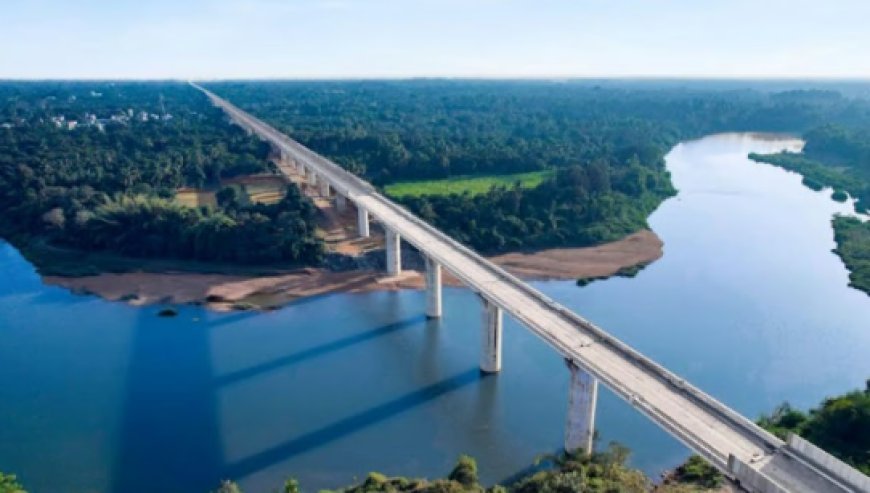
# Mumbai–Ahmedabad Bullet Train Crosses Major Milestone as 300 km of Viaduct Construction Is Completed
India's ambitious dream of joining the world's leading high-speed rail nations has taken another significant step forward. The Mumbai–Ahmedabad Bullet Train project, often described as the country's most transformative transportation initiative, has successfully completed 300 kilometers of viaduct construction, marking one of the biggest milestones since the project was first announced.
For years, the bullet train project has symbolized India's broader vision of modern infrastructure, technological advancement, and economic transformation. While progress reports have surfaced periodically, the completion of 300 kilometers of elevated track infrastructure demonstrates that the project is steadily moving from blueprint to reality.
The Mumbai–Ahmedabad High-Speed Rail Corridor is India's first bullet train project and one of the largest infrastructure undertakings in the nation's history. Spanning approximately 508 kilometers, the corridor will connect two of India's most important economic centers—Mumbai, the country's financial capital, and Ahmedabad, one of Gujarat's fastest-growing commercial hubs.
Once operational, the high-speed rail line is expected to transform intercity travel by reducing journey times from nearly seven hours to around two to three hours, depending on service patterns. Beyond speed, however, the project represents something much larger: a shift toward next-generation transportation systems capable of supporting India's growing economy and rapidly urbanizing population.
## A Milestone That Reflects Years of Planning
The announcement regarding the completion of 300 kilometers of viaduct construction was made by the National High-Speed Rail Corporation Limited (NHSRCL), the agency responsible for executing the project.
Viaducts form the backbone of the high-speed rail corridor. Unlike conventional railway lines that often operate at ground level, bullet trains require highly precise track alignments and dedicated infrastructure to safely maintain speeds exceeding 300 kilometers per hour.
The completion of 300 kilometers of viaducts means that more than half of the corridor's elevated track structure is now physically in place. Considering the engineering complexity involved, this milestone is widely viewed as one of the project's most important achievements to date.
Construction teams have worked across multiple locations simultaneously, overcoming challenges related to land acquisition, urban development constraints, environmental approvals, and difficult terrain.
What makes this accomplishment particularly notable is the scale of execution. Thousands of engineers, technicians, project managers, construction workers, and specialists have contributed to reaching this stage.
## Understanding the Full Span Launching Method
One of the biggest reasons behind the project's accelerated progress is the adoption of the Full Span Launching Method (FSLM), a sophisticated construction technology widely used in advanced railway projects around the world.
Traditionally, elevated railway structures are built using smaller segments that are assembled piece by piece. While effective, this approach can be time-consuming and labor-intensive.
The Full Span Launching Method changes this process dramatically.
Instead of assembling multiple smaller components at the construction site, entire concrete spans are manufactured beforehand and then lifted into place using specialized launching equipment.
Each full-span girder used in the Mumbai–Ahmedabad Bullet Train project weighs approximately 970 metric tonnes and stretches nearly 40 meters in length.
The engineering precision required is extraordinary.
Massive launching machines transport and position these structures with remarkable accuracy, allowing construction teams to build viaduct sections much faster than conventional methods.
According to project officials, the technology can accelerate construction by several times compared to traditional segmental approaches.
This improvement is not simply about speed. Faster construction also reduces disruptions to surrounding communities, minimizes traffic impacts, and helps maintain project timelines more effectively.
## Why the Mumbai–Ahmedabad Corridor Matters
The bullet train project is often discussed primarily in terms of transportation, but its significance extends far beyond travel convenience.
India's economy is growing at one of the fastest rates among major countries around the world. As urban populations expand and economic activity becomes increasingly interconnected, transportation infrastructure plays a critical role in sustaining growth.
The Mumbai–Ahmedabad corridor is particularly important because it connects regions responsible for a substantial share of India's industrial and commercial output.
Major industries located along the route include:
- Manufacturing
- Pharmaceuticals
- Financial services
- Information technology
- Textiles
- Petrochemicals
- Engineering services
Improved connectivity between these economic centers can help businesses move talent, investors, and professionals more efficiently.
In many countries, high-speed rail systems have stimulated regional development by creating new economic opportunities around station locations.
Officials hope similar benefits will emerge across western India once the bullet train becomes operational.
## The 12 Stations Shaping India's High-Speed Rail Future
The corridor will include 12 strategically located stations:
| Station | State |
|---|---|
| Mumbai | Maharashtra |
| Thane | Maharashtra |
| Virar | Maharashtra |
| Boisar | Maharashtra |
| Vapi | Gujarat |
| Bilimora | Gujarat |
| Surat | Gujarat |
| Bharuch | Gujarat |
| Vadodara | Gujarat |
| Anand | Gujarat |
| Ahmedabad | Gujarat |
| Sabarmati | Gujarat |
Each station has been designed not only as a transportation hub but also as a catalyst for urban development.
Cities such as Surat and Vadodara are expected to benefit significantly from improved business connectivity, while Mumbai and Ahmedabad will become anchors of India's first true high-speed rail ecosystem.
One of the most technically complex components of the entire project is the underground station being developed at Bandra Kurla Complex (BKC) in Mumbai.
Located beneath one of the country's busiest business districts, the station requires advanced tunneling and construction techniques rarely seen in Indian infrastructure projects.
## Learning from Japan's Shinkansen Success
A defining feature of the Mumbai–Ahmedabad Bullet Train project is its collaboration with Japan.
The corridor is being built using technology derived from Japan's world-famous Shinkansen system, widely recognized as one of the safest and most reliable high-speed rail networks ever developed.
Since launching in 1964, the Shinkansen has transported billions of passengers while maintaining an exceptional safety record.
India's adoption of this technology reflects a broader strategy of learning from established high-speed rail systems rather than developing an entirely new framework from scratch.
The partnership includes technology transfer,technical assistance, training programs, and operational expertise.
Indian engineers and railway professionals have undergone extensive training to understand high-speed rail operations, maintenance procedures, and safety standards.
This knowledge transfer may prove just as valuable as the infrastructure itself, helping build domestic expertise for future high-speed rail projects across the country.
## Beyond Transportation: The Economic Impact
Large-scale infrastructure projects often generate benefits long before completion.
The Mumbai–Ahmedabad Bullet Train project has already created employment opportunities across engineering, construction, manufacturing, logistics, and project management sectors.
Thousands of workers are directly involved in project execution, while many more support related supply chains.
Local businesses in construction zones have also experienced increased economic activity due to workforce demand and infrastructure investments.
Once operational, the corridor could further stimulate:
- Tourism growth
- Real estate development
- Commercial investment
- Business travel
- Regional industrial expansion
- Job creation
Economists frequently emphasize that modern transportation infrastructure reduces friction in economic activity.
By shortening travel times and improving accessibility, businesses gain greater flexibility and efficiency.
These improvements often translate into long-term economic gains that extend well beyond transportation itself.
## A Defining Moment for India's Infrastructure Story
The completion of 300 kilometers of viaduct construction is more than just a progress update.
It represents a tangible sign that one of India's most ambitious infrastructure projects is steadily moving toward reality.
Challenges remain. Major construction activities, station development, track installation, signaling systems, testing, and operational preparation still lie ahead.
However, the project has clearly entered a stage where its physical presence is visible across large sections of the corridor.
For supporters, this milestone reflects India's growing confidence in executing world-class infrastructure projects. For engineers, it showcases remarkable technical achievement. For travelers, it offers a glimpse into a future where high-speed rail becomes part of everyday life.
As construction continues toward the targeted completion timeline, the Mumbai–Ahmedabad Bullet Train is no longer merely a vision of the future—it is increasingly becoming a visible symbol of India's next era of transportation.
## Environmental Impact and Sustainability Benefits
One of the strongest arguments in favor of high-speed rail systems worldwide is their potential to create a more sustainable transportation network. While the Mumbai–Ahmedabad Bullet Train project is often discussed in terms of speed and convenience, its environmental benefits could be equally significant in the long run.
Transportation remains one of the largest contributors to greenhouse gas emissions globally. In India, growing urbanization and rising vehicle ownership have increased pressure on roads, airports, and conventional railway systems. High-speed rail offers an alternative that can move large numbers of passengers efficiently while reducing dependence on fossil-fuel-intensive travel modes.
The bullet train corridor is expected to encourage travelers to shift from short-haul flights and long-distance road journeys to electric-powered rail transport. Since high-speed trains produce significantly lower carbon emissions per passenger compared to airplanes, the project aligns with India's broader sustainability goals and commitments toward reducing carbon intensity.
Another important benefit is energy efficiency. High-speed rail systems can transport thousands of passengers simultaneously using less energy per person than private vehicles or domestic air travel. Over time, this could contribute to lower transportation-related emissions across western India.
The project also incorporates modern engineering practices designed to minimize environmental disruption. Elevated viaducts reduce land fragmentation, while advanced construction methods help limit impacts on surrounding ecosystems. Environmental assessments conducted during planning stages focused on wildlife movement, water resources, noise control, and habitat protection.
As India moves toward cleaner energy sources such as solar and wind power, the environmental advantages of electrified transportation systems like the bullet train could become even more pronounced.
## Economic Corridor Development Along the Route
The Mumbai–Ahmedabad Bullet Train project is not merely a transportation initiative; it is expected to function as a catalyst for regional economic development.
Historically, major transportation corridors have transformed the cities and regions they connect. Examples from Japan, France, and China demonstrate how high-speed rail can stimulate business activity, attract investments, and create entirely new growth centers.
The route between Mumbai and Ahmedabad passes through several rapidly developing urban centers, including Surat, Vadodara, Bharuch, Vapi, Anand, and Boisar. Improved connectivity between these locations is expected to strengthen economic integration and create new opportunities for businesses.
Cities such as Surat already serve as major hubs for textiles, diamonds, and manufacturing. Faster travel times could encourage more companies to establish regional offices, expand operations, and increase collaboration with businesses located in neighboring cities.
Experts believe that station areas may emerge as new commercial districts, attracting investments in:
- Office complexes
- Hotels
- Retail centers
- Residential developments
- Logistics facilities
- Technology parks
The concept is often referred to as Transit-Oriented Development (TOD), where urban growth is strategically concentrated around transportation infrastructure.
Property markets near station locations have already shown signs of increased interest from developers and investors anticipating future growth opportunities.
Beyond direct economic activity, the project could improve labor mobility by allowing professionals to commute between cities more efficiently. This increased connectivity may help businesses access larger talent pools while giving workers more employment options.
## Expected Ticket Pricing and Passenger Demand
One of the most frequently asked questions surrounding the Mumbai–Ahmedabad Bullet Train concerns ticket pricing.
While final fare structures may evolve closer to commercial operations, officials have consistently emphasized the need to balance affordability with operational sustainability.
Industry observers expect ticket prices to be positioned between premium railway services and domestic airline fares. The goal is to provide a competitive alternative that offers speed, reliability, comfort, and convenience.
Several factors will influence pricing decisions:
- Operational costs
- Energy consumption
- Maintenance requirements
- Passenger demand
- Service frequency
- Government policies
The project is expected to attract a diverse passenger base, including:
## Business Travelers
Business professionals are likely to represent a significant share of early users. The ability to travel between Mumbai and Ahmedabad in approximately two hours could dramatically improve productivity and reduce overnight travel requirements.
## Frequent Commuters
Some passengers may use the service regularly for work-related travel between cities connected by the corridor.
## Tourists
The route connects important commercial and cultural destinations, making it attractive for domestic and international tourism.
## Students and Professionals
Improved accessibility could benefit students, researchers, consultants, and skilled professionals who frequently travel between educational and business centers.
Forecasts prepared during project planning suggest strong long-term passenger demand, particularly as India's middle class continues to expand and mobility requirements increase.
## Future Bullet Train Routes Planned in India
The Mumbai–Ahmedabad corridor is widely viewed as the beginning of a much larger high-speed rail vision.
Government agencies have already studied several additional corridors that could become future bullet train routes if the first project proves successful.
Proposed corridors include:
| Proposed Route | Approximate Region |
|---|---|
| Delhi–Varanasi | North India |
| Delhi–Ahmedabad | Western India |
| Mumbai–Nagpur | Maharashtra |
| Chennai–Bengaluru–Mysuru | South India |
| Delhi–Amritsar | Northern Corridor |
| Varanasi–Howrah | Eastern India |
These proposed routes are currently at various stages of feasibility assessment, planning, and evaluation.
If implemented, they could form the foundation of a nationwide high-speed rail network connecting major economic centers across the country.
The success of the Mumbai–Ahmedabad project will likely influence future investment decisions and public confidence in high-speed rail expansion.
## Challenges, Criticism, and Government Responses
Despite its ambitious goals, the bullet train project has not been without controversy.
Large infrastructure projects often encounter criticism related to costs, land acquisition, environmental concerns, and implementation timelines. The Mumbai–Ahmedabad corridor has faced similar challenges.
## Land Acquisition Concerns
Acquiring land for a project spanning more than 500 kilometers required extensive negotiations with property owners and local communities.
In several areas, concerns were raised regarding compensation, rehabilitation, and the impact on livelihoods.
Government agencies responded by implementing compensation packages and engaging with affected stakeholders through consultation processes.
## Cost and Funding Debates
Critics have questioned whether the financial resources allocated to the bullet train could be used for upgrading conventional railway infrastructure instead.
Supporters argue that both objectives can be pursued simultaneously and emphasize that major economies often invest in multiple transportation systems to meet diverse mobility needs.
The project benefits from substantial financial assistance through a low-interest loan arrangement with Japan, making long-term financing more manageable than conventional borrowing.
## Construction Delays
Various factors, including regulatory approvals, land acquisition challenges, and the COVID-19 pandemic, contributed to project delays.
However, recent construction milestones indicate that execution has accelerated significantly, particularly through the use of advanced engineering technologies such as the Full Span Launching Method.
## Public Perception
Some critics initially viewed the bullet train as a luxury project intended primarily for affluent travelers.
Government officials and project planners counter that high-speed rail investments generate broader economic benefits, create jobs, stimulate development, and enhance long-term national competitiveness.
## Conclusion and Future Outlook
The completion of 300 kilometers of viaduct construction marks one of the most important achievements in the history of India's first high-speed rail project.
What began as an ambitious vision is steadily becoming a tangible reality. The Mumbai–Ahmedabad Bullet Train is not simply about reducing travel times; it represents a broader transformation in how India approaches infrastructure, mobility, technology, and economic development.
From advanced Japanese engineering and state-of-the-art signaling systems to sustainability benefits and regional growth opportunities, the project embodies many of the characteristics associated with modern transportation networks around the world.
Challenges remain, and significant construction work still lies ahead. Yet the pace of progress achieved so far demonstrates that India is increasingly capable of delivering complex infrastructure projects at an international standard.
When the first bullet train eventually begins carrying passengers between Mumbai and Ahmedabad, it will symbolize much more than technological advancement. It will represent a new chapter in India's transportation story—one focused on speed, innovation, connectivity, and long-term economic growth.
As the country continues investing in future high-speed rail corridors, the Mumbai–Ahmedabad project may ultimately be remembered as the initiative that laid the foundation for India's high-speed future.