
India’s Operation Sindoor Outreach Begins Against Terror Links
India launches Operation Sindoor, a global outreach to expose Pakistan's terror ties, justify Indus Treaty suspension, and reshape global counterterrorism talks.
 Utej
Utej
# Beyond the Battlefield: How India Explained Operation Sindoor to the World
Winning a war is not limited to battlefield outcomes. International perception and public opinion can play an equally important role — a reality that became especially visible in May 2025., India understood this better than it ever had before.
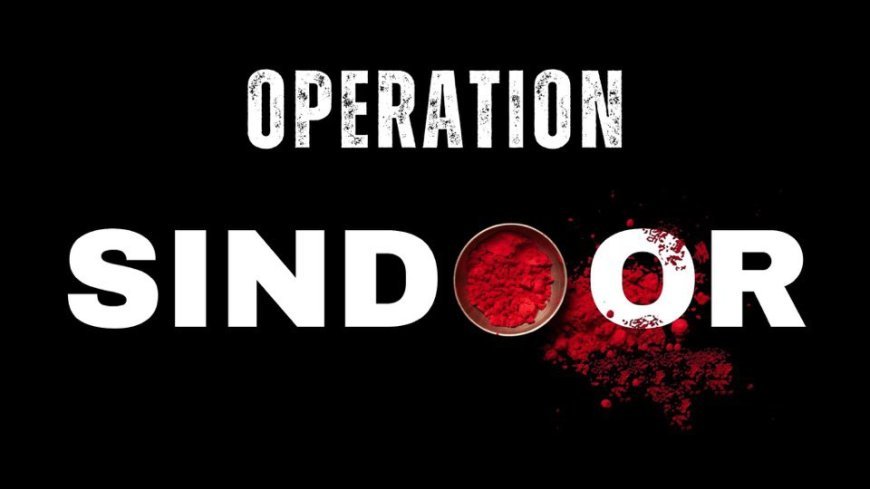
The military strikes on the night of 6-7 May were swift, precise, and over in minutes. Nine terror camps in Pakistan and Pakistan-administered Kashmir, struck in the early hours of the morning, in direct retaliation for the Pahalgam massacre that had killed 26 civilians on 22 April. Defence Minister Rajnath Singh would later tell the Lok Sabha that the armed forces had "destroyed nine terrorist hideouts" and eliminated more than 100 terrorists in what he described as a "non-escalatory and measured" response. India called it Operation Sindoor — named after the red powder worn by married women, a deliberate symbol of grief, retribution, and national honour.
But what happens the morning after a military strike? When the missiles have landed and the world wakes up to the news, there is a second operation that begins — one with no soldiers, no aircraft, and no coordinates. It happens in foreign ministries, in parliamentary meeting rooms, in conversations with think tanks and diaspora communities across six continents. India called this second operation the Doot Outreach. And in many ways, it was just as important as what came before it.
## What Led Here: The Pahalgam Attack and Its Aftermath
To understand the scale and urgency of what India launched diplomatically, you have to go back to 22 April 2025 and the Pahalgam valley in Jammu and Kashmir.
That afternoon, gunmen opened fire on a group of tourists in Pahalgam, killing 26 people — civilians, most of them on holiday, targeted solely because of their religion. The attack bore the hallmarks of The Resistance Front (TRF), an offshoot of the Pakistan-based Lashkar-e-Taiba, a group with documented ties to Pakistan's ISI. India mourned. Then India moved.
Over the following two weeks, India took a series of escalatory steps that made the international community nervous in the way that only nuclear-armed neighbours can: it suspended the Indus Waters Treaty, expelled Pakistani diplomats, closed air corridors, and began what foreign observers described as military preparations. On 6-7 May, the strikes happened. India presented them as targeted, proportionate, and aimed exclusively at terror infrastructure. Pakistan, which denied any involvement in Pahalgam, called the strikes "unprovoked."
The ceasefire, brokered with the involvement of the United States — Vice President JD Vance had initially said the conflict was "not America's business" before the escalation forced a course correction — came days later. But ceasefire is not the same as resolution. The military phase ended. The narrative war continued.
India had a strong case to make to the world. But making it required going to the world — not waiting for the world to come to India.
## The Doot Outreach: What It Was and Why It Was Built the Way It Was
The Doot Outreach — the diplomatic component of Operation Sindoor — was, by any measure, one of the most ambitious parliamentary foreign policy deployments in India's modern history.
Seven all-party parliamentary delegations. 59 Members of Parliament, former ministers, and experienced diplomats. 33 countries, plus the European Union headquarters in Brussels. All of it executed between 21 May and 5 June 2025.
The numbers matter, but the design matters even more. Parliamentary Affairs Minister Kiren Rijiju, who coordinated the outreach, described it on X as "a powerful reflection of national unity above politics." That phrase was not accidental. The deliberate choice to send all-party delegations — not ruling party emissaries, not government ministers, but a cross-section of India's elected representatives from the BJP and Congress to the DMK, JD(U), Shiv Sena, CPI(M), IUML, NCP, and more — was a message in itself. India was not sending its government to lobby foreign capitals. India was sending its democracy.
Each delegation also included a retired diplomat, adding professional credibility and institutional knowledge to the political weight. Foreign Secretary Vikram Misri briefed all delegation members before departure, ensuring they carried consistent, evidence-backed messaging.
The destinations were not random. They covered virtually every strategically significant part of the world that matters to India's foreign policy calculus.
## Who Went Where: The Seven Delegations
The coverage was comprehensive in a way that rewards closer examination.
Group 1, led by BJP MP Baijayant Panda, visited Saudi Arabia, Bahrain, Kuwait, and Algeria — the Arab world, where India has deep economic relationships, a massive diaspora, and where Pakistan has historically enjoyed religious solidarity. Bringing a delegation that included AIMIM's Asaduddin Owaisi — a Muslim politician — to these destinations was a carefully considered signal. This was not a Hindu nationalist government talking about Pakistan. This was an India that included Muslim voices, presenting a unified case.
Group 2 , led by BJP MP Ravi Shankar Prasad, took the most prominent European circuit: the UK, France, Germany, Italy, Denmark, and the EU headquarters in Brussels. These are permanent UN Security Council members and major economic partners. The delegation included Congress MP Dr Amar Singh, former Union Minister MJ Akbar, and Priyanka Chaturvedi of Shiv Sena (UBT) — opposition included, not excluded. Former Ambassador Pankaj Saran provided diplomatic depth. In London, the group met with the Speaker of the House of Commons and members of both Houses of the UK Parliament, as well as think tanks and the Indian diaspora.
Group 3 , led by JD(U) MP Sanjay Kumar Jha, covered Southeast and East Asia: Indonesia, Malaysia, South Korea, Japan, and Singapore — all significant trading partners, all countries with their own complex relationships with both Pakistan and China. The delegation included BJP MPs Aparajita Sarangi and Brij Lal, Trinamool Congress MP Abhishek Banerjee, CPI(M)'s John Brittas, and Congress leader Salman Khurshid.
Group 4 , led by Shiv Sena MP Shrikant Eknath Shinde, went to the UAE, Liberia, Congo, and Sierra Leone — reaching into Africa,where India has beenactively building relationships under its broader South-South diplomacy agenda. The IUML's ET Mohammed Basheer being part of this group was another deliberate signal: an Indian Muslim parliamentarian carrying India's case to Muslim-majority countries.
Group 5, was perhaps the highest-profile in terms of individual name recognition: Congress MP Shashi Tharoor led the delegation to the United States, Panama, Guyana, Brazil, and Colombia. Tharoor is one of India's most internationally recognised public intellectuals, a former UN Under-Secretary-General, and a genuine diplomatic asset. His presence in Washington and Brasilia was not just symbolic — it was substantive.
Group 6 , was led by DMK's Kanimozhi Karunanidhi and covered Spain, Greece, Slovenia, Latvia, and Russia — a circuit that combined Southern Europe, a Baltic state, and crucially, India's long-standing strategic partner Russia. Getting Russia right in this context was important: Moscow had its own complicated position on the India-Pakistan crisis, and having a senior opposition MP — from a South Indian regional party, no less — deliver India's message in Moscow underscored the universality of the national position.
Group 7, led by NCP-SCP's Supriya Sule, visited Ethiopia and several African nations, engaging with the African Union Commission and top Ethiopian lawmakers. Given that African nations represent a significant bloc in the UN General Assembly and have been increasingly courted by both India and Pakistan for diplomatic support, this leg was strategically important.
## What They Carried: The Evidence and the Message
The delegations were not sent to give speeches. They were sent to make a case.
Each team carried dossiers — compiled briefings on Pakistan's documented history of supporting terrorist organisations, the evidence linking the Pahalgam attackers to Pakistan-based groups, the timeline of events, and India's stated position that its strikes were targeted at terror infrastructure and not at Pakistani civilians or military installations.
They also carried something harder to quantify but equally important: personal credibility. These were not unnamed government officials reading from a script. They were elected parliamentarians — people who had stood for office, who had constituents, who were accountable to democratic processes. When Salman Khurshid, a former Indian External Affairs Minister and Congress leader, explained India's position in Jakarta or Seoul, he was doing so as someone who had disagreed publicly with the current government on many things. His presence in those rooms was its own kind of evidence.
The key messages were consistent across all seven delegations. India's zero-tolerance policy on terrorism. The direct link between the Pahalgam attack and Pakistan-based groups. The targeted, non-escalatory nature of the military response. India's preference for peace, balanced against its obligation to protect its citizens. And the Indus Waters Treaty suspension — presented not as aggression but as the logical consequence of a situation where a treaty co-exists with terrorism.
## The International Reception: Broadly Positive, With Complications
The reception across 33 countries was largely supportive — but the details reveal a more complicated picture that India's own analysts have not shied away from examining.
Countries like Indonesia, Liberia, and several African nations reportedly welcomed India's engagement and agreed to carry India's concerns into multilateral forums. The European delegations found receptive audiences in the UK and France, where there is existing institutional understanding of counterterrorism imperatives. In the United States, the Tharoor-led delegation engaged with policymakers who had their own reasons to be sympathetic to India's framing of the conflict as a response to state-sponsored terrorism.
Russia presented the most diplomatically complex stop. Moscow had, by the time of the delegations, maintained a carefully balanced position — expressing concern about escalation while stopping short of condemning India's strikes. The Russian relationship with India, built over decades on defence cooperation and strategic autonomy from Western alliances, survived the crisis intact, but required careful management.
China's position cast a shadow over the entire outreach. A Carnegie India roundtable that brought together diplomats from the delegations later noted that China had provided Pakistan with "political and military support" during the crisis, including "real-time intelligence." Getting China's close partners to hear India's case without alienating their own Beijing relationships was a needle the delegations had to thread carefully — with varying degrees of success.
The honest assessment from India's own strategic community was that while the outreach was broadly successful in presenting India's narrative, it did not achieve the harder goal of meaningfully "isolating" Pakistan internationally. Pakistan conducted its own diplomatic outreach simultaneously — and Islamabad, with its close ties to China, Turkey, and much of the Gulf, was not without its own friends in global capitals.
## The Opposition Question: National Unity or Political Theatre?
Back home, not everyone was applauding.
Congress General Secretary Jairam Ramesh was direct in his criticism, describing the outreach as "another attempt to divert the public's attention" — particularly in the context of ongoing domestic economic criticism the government was facing. His concern was not with the principle of diplomatic outreach but with the timing and the framing: that a government under domestic pressure was using a national security moment to change the subject.
The Trinamool Congress withdrew its originally named representative, Yusuf Pathan, from Group 3 mid-preparation — a public signal of reservations about the process without a full boycott.
These criticisms were noted, but they did not fundamentally undermine the optics of the outreach. The fact that Congress MPs Shashi Tharoor, Salman Khurshid, and Manish Tewari participated — and did so substantively, not reluctantly — gave the initiative a credibility that purely ruling-party missions could not have achieved. When PM Modi met all seven delegations at his residence on 10 June, the photographs of a room full of MPs from across India's political spectrum reporting back their experiences was exactly the image the government had wanted to create.
JD(U) MP Sanjay Jha, reporting from that meeting, said the Prime Minister "appreciated the work of every delegation" and that every group had shared not just their presentations but the feedback they had received in each country — building a real-time picture of where India's international standing actually sat after the conflict.
## The Bigger Strategic Picture: What India Was Really Trying to Do
Zoom out from the specific delegations and a clearer strategic logic emerges.
India has long felt that its experience of cross-border terrorism — an experience stretching back decades, documented in attacks from the 2001 Parliament attack to the 2008 Mumbai attacks to Pulwama and now Pahalgam — has not received the international attention and condemnation it deserves. Part of this frustration is about China's blocking of UN designations for Pakistan-based terrorist leaders. Part of it is about the perception that the world treats India-Pakistan as a "both sides" conflict rather than as a case of one country exercising legitimate self-defence against another's state-sponsored aggression.
The Doot Outreach was India's most systematic attempt yet to correct that perception. It was also, implicitly, preparation for future international conversations — at the United Nations, at multilateral forums, in bilateral relationships — where India's narrative would need to stand up against Pakistan's counter-narrative.
The Carnegie India roundtable observation was revealing in this context: the delegations also helped India understand, in real time, which countries were genuinely sympathetic, which were diplomatically neutral, and which were quietly aligned with Pakistan. That intelligence — about where India's relationships actually are in a moment of genuine crisis — is itself valuable, regardless of what any specific delegation achieved in any specific bilateral meeting.
## What It Means Going Forward
The Doot Outreach ended in early June. The delegations came home. PM Modi received them. The formal operation was declared complete.
But the work it was part of is ongoing.
India has, through Operation Sindoor and its diplomatic aftermath, signalled something important: that it is willing to act militarily against terror infrastructure despite the nuclear shadow, that it will build international coalitions to support that action, and that it expects its democracy to be a credential — not just a domestic arrangement — in the arena of global opinion.
Whether the world ultimately accepts India's framing — that this was a measured response to state-sponsored terrorism rather than dangerous escalation — is a question that will play out over months and years, not weeks. Pakistan's own simultaneous outreach, and China's continued support for Islamabad, ensure that the narrative contest is far from over.
What is clear is that India is no longer willing to win wars on the ground and lose them in the world's living rooms. The Doot Outreach was 59 MPs, 33 countries, and two weeks. It was India saying, clearly and loudly, to anyone willing to listen: we have a case to make, we are going to make it everywhere, and we are going to make it together.