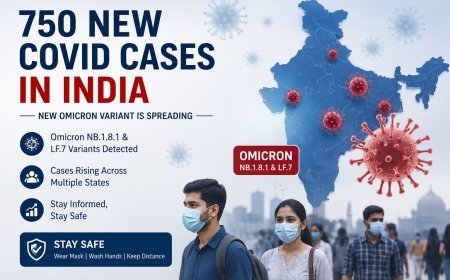

COVID Surge in India: 257 New Cases Rise Amid Omicron Variant
India sees a mild surge in COVID-19 cases driven by Omicron sub-variants. Health officials advise caution and vaccination amid rising infections.
 Utej
Utej
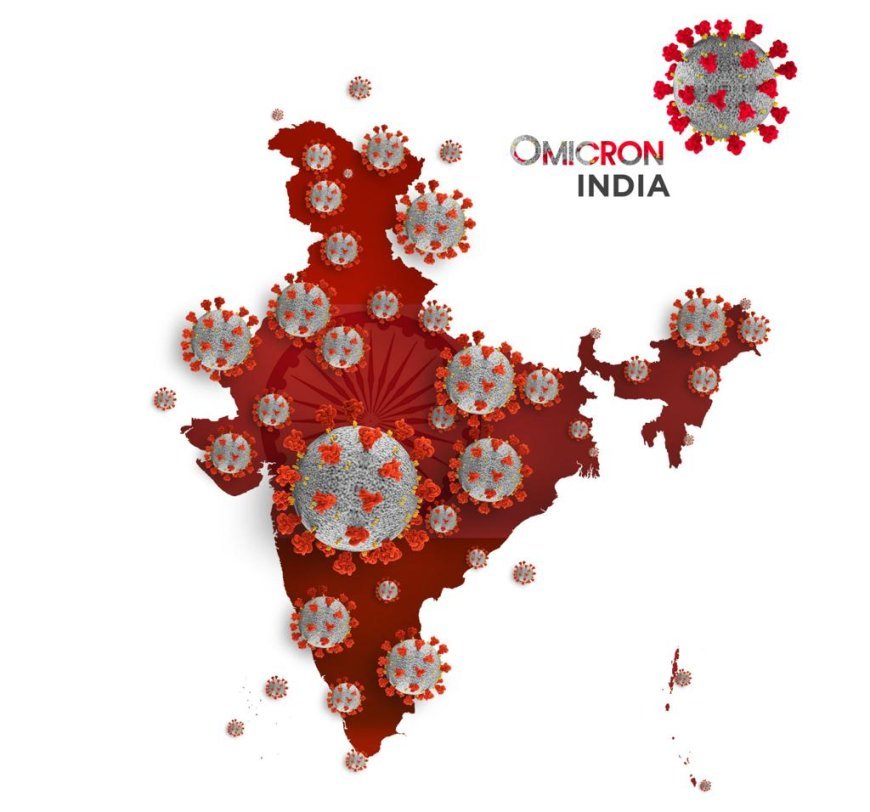
# COVID Is Back — Quietly, Gently, and With New Names: What India Needs to Know in 2025
Most of us stopped checking the COVID dashboard somewhere in 2023. We put the masks away, stopped tracking case numbers, and quietly agreed — without anyone actually announcing it — that the pandemic was over and we were moving on.People started moving toward normal life once more, with weddings and social events returning in full swing. Flights got crowded. Office floors buzzed again. The hand sanitiser by the door became decoration.
Then May 2025 arrived. And the numbers started moving again.
Not dramatically. Not in the terrifying, exponential way that marked 2020 or the devastating second wave of 2021. Nothing like the chaos of the Delta wave that overwhelmed hospitals, exhausted doctors, and shook an entire country to its core. This time, the movement is quieter — 257 active cases reported as of 19 May, creeping upward through May and June, passing 300, then 1,000, then nearly 5,000 by early June. Each number small in isolation. Each number moving in only one direction.
And the variants behind it have names that most people have never heard before: NB.1.8.1. LF.7. XFG. Descendants of JN.1, which is itself a descendant of Omicron, which was itself a descendant of Delta, which was a descendant of the original strain that changed everything. The virus, as it always does, kept moving while we weren't watching.
This is the story of where India stands with COVID in 2025 — not a story of panic, but a story of attention. Because the thing about waves is that they are much easier to manage when you see them coming.
## The Numbers: Small But Moving
On 19 May 2025, India's Ministry of Health reported 257 active COVID-19 cases. That number, placed against the backdrop of what India experienced in 2021 — when active cases exceeded 4 million and the country's oxygen supply buckled under the pressure — seems almost negligible. And in one sense, it is.
But numbers have a direction as well as a magnitude. By 26 May, the figure had crossed 300. By 31 May, the number of active cases had risen to 2,710, with Kerala reporting the highest share at 1,147 cases, followed by Maharashtra with 424 and Delhi with 294. By 5 June, India’s active case count had increased further to 4,866 — with 7 deaths reported in a 24-hour period, including a 5-month-old infant in Delhi and an 87-year-old, alongside fatalities in Karnataka and Maharashtra.
That trajectory — from 257 to nearly 5,000 in roughly two weeks — is not a reason for panic. Most of these cases are mild, resolving at home within three to four days without hospitalisation. But it is a reason for attention, because it reflects a pattern that health authorities across Asia recognised weeks earlier: these new subvariants spread fast, even when they do not cause serious illness.
The geographic spread within India tells its own story. Kerala, Maharashtra, and Tamil Nadu have continued to report the highest number of active cases, but the rise is no longer limited to southern India. States such as Delhi, Karnataka, Gujarat, and Punjab have also seen an increase in active case numbers. The ICMR Director General noted publicly that the uptick had moved from south to west and was now being tracked in northern India. With active cases reported across as many as 20 Indian states, the situation reflected a nationwide resurgence rather than being confined to a specific region or local outbreak.
## The Variants: Understanding the Family Tree
To understand why this wave is happening, you need to understand the family tree of the virus — or at least the relevant branch of it that is circulating right now.
It starts with Omicron, the variant that defined the end of the pandemic's acute phase in late 2021 and early 2022. Omicron was more transmissible than anything before it, but significantly less severe — a combination that made it the dominant global strain for years. Within the Omicron family, a sub-lineage called BA.2.86 emerged, which scientists informally nicknamed "Pirola." From BA.2.86, JN.1 descended — a strain that caused a significant global wave in 2024 but, notably, did not hit India particularly hard at the time.
JN.1 carries approximately 30 mutations compared to its ancestors. Now, in 2025, we are looking at JN.1's own children and grandchildren: NB.1.8.1, LF.7, and XFG.
NB.1.8.1 was first identified in Tamil Nadu in April 2025. It is classified by the WHO as a "Variant Under Monitoring" — a formal designation that means scientists are watching it carefully but have not yet elevated it to Variant of Concern status. The WHO's own assessment rates it as a "low global public health risk" in terms of severity, but acknowledges that its mutations raise questions about vaccine efficacy and the potential for reinfection. NB.1.8.1 is reportedly behind the significant surges seen in China and Hong Kong. The Indian SARS-CoV-2 Genomics Consortium identified a single case of the NB.1.8.1 variant in India.
LF.7 emerged in Gujarat in May 2025 — four instances were detected, making it a new arrival on Indian soil. LF.7 shares similar characteristics with NB.1.8.1: high transmissibility, mild clinical presentation, and notable immune evasion. One specific characteristic that distinguishes LF.7 from older variants is that it does not typically cause loss of taste or smell — the symptom that was almost diagnostic for COVID in earlier phases. Instead, it presents primarily as an upper respiratory infection. In Singapore and Hong Kong, LF.7 and NB.1.8 together account for over two-thirds of sequenced cases.
XFG is the newest addition to the family. It is essentially a hybrid — a recombinant of LF.7 and LP.8.1.2, with the earliest sample traced to January 2025. XFG has been spreading globally, and in the UK, the Health Security Agency reported it had accounted for 30% of cases in England by late June. India's doctors and health officials are tracking its emergence alongside the other subvariants.
What all threevariants share is a core characteristic: they are highly transmissible but currently not causing the kind of severe illness —heavy hospitalisations, ICU admissions, ventilator dependency — that defined earlier waves. Dr RajeevJayadevan, co-chairman of the National IMA COVID Taskforce, summarised the situation plainly: "What we are seeing on the ground is that fewer hospitalisations are required due to this strain and recovery occurs in three to four days. As of now, we have no evidence that the viral strains have undergone any drastic changes — genetically or in the way the disease is caused — compared to since the end of 2021."
That is reassuring. But it is not a reason to stop paying attention.
## Asia Before India: The Early Warning Signs
India's current wave did not appear from nowhere. It followed a pattern that health authorities in Southeast and East Asia had been tracking for weeks before the Indian numbers started moving.
Singapore was one of the first to ring the alarm bell clearly. In the week ending 3 May 2025, Singapore recorded approximately 14,200 new COVID cases — a 28% increase from the previous week, when 11,100 cases had been reported. Hospitalisations rose by around 30%. In response, Singapore's Ministry of Health resumed weekly COVID updates for the first time in nearly a year — itself a signal about the seriousness with which authorities were treating the resurgence.
Hong Kong told a starker story. The infection rate rose from 1.7% in mid-March to 11.4% — surpassing the August 2024 peak. Severe adult cases and deaths hit a one-year high, with 31 deaths recorded over four weeks and daily hospitalisations climbing from 102 to 133. Authorities were careful to note that this was not driven by a more dangerous variant, but by waning immunity and lower booster uptake, particularly among the elderly. As Hong Kong's health ministry stated: there was "no indication that the circulating variants are more transmissible — or cause more severe cases — than during the pandemic." The rising deaths were primarily concentrated in unvaccinated or under-vaccinated elderly populations.
Thailand's numbers were the most dramatic in the region. In the week ending 17 May, Thailand reported 33,030 new cases — more than double the 16,000 recorded the prior week. Most infections were concentrated in Bangkok and surrounding provinces.
China's trajectory was different but noteworthy. Between late March and early May, the positivity rate among flu-like illness cases rose from 7.5% to 16.2% — the highest in a year. Overall infections remained manageable, but the direction was unmistakable.
The consistent factor across all four countries? The same subvariants — LF.7 and NB.1.8 — driving the surge. The same underlying driver: waning immunity from vaccinations that, for many people, happened two or three years ago without subsequent boosters. India, watching its neighbours, had advance notice. The question was whether it would act on it.
## Why Now? The Science of Waning Immunity
One of the most common questions people are asking right now is: why is this happening in 2025? We were vaccinated. We had infections. We should have some immunity. Why does it keep coming back?
The answer lies in two interconnected realities: immune waning and viral evolution.
Vaccines against COVID-19 provide strong initial protection. But that protection is not permanent — for any vaccine, against any virus. Antibody levels decline over time. The period in which vaccines provide robust protection against infection (as distinct from severe disease) is measured in months, not years. For many Indians, the last vaccination dose happened in 2021 or early 2022. That is three to four years of immune drift without a booster calibrated for the current circulating variants.
India's vaccination coverage picture reflects this reality starkly. As of May 2025, over 95% of eligible adults had received the initial two doses — a genuine achievement representing one of the largest vaccination campaigns in human history. Approximately 73% had received at least one booster dose. But only 18% had taken an updated booster tailored specifically for Omicron sub-lineages — meaning the vast majority of vaccinated Indians were carrying protection optimised for a strain that the virus has long since moved past.
The virus, meanwhile, has not been standing still. Virologist Dr T. Jacob John summed it up with characteristic directness: "These newer variants are driving the spike, though they're not more severe." The mutations in NB.1.8.1 and LF.7 specifically enhance what scientists call "immune evasion" — the virus's ability to partially slip past the antibodies generated by earlier infections or older vaccines. It does not mean those antibodies are useless; they still significantly reduce the likelihood of severe illness. But they are less effective at preventing infection altogether.
The third factor is behavioural. Across India, and across Asia, the habits that suppressed transmission during the pandemic have largely disappeared. Masks in crowded spaces, hand sanitisation, avoiding packed indoor gatherings — all of these reduced not just COVID transmission but the spread of respiratory viruses generally. As they have faded, the virus has found the gaps. High humidity and heat in various parts of India may also be affecting individual immunity, making people more susceptible than they would be in cooler or drier conditions.
## How India Is Responding
India's institutional response to the 2025 wave has been measured and deliberate — neither the emergency mobilisation of 2021 nor the complete indifference of a government that has moved on.
The Indian Council of Medical Research convened a high-level review as case numbers began to rise. The conclusion, shared publicly, was that the situation remains under control. But "under control" in public health language is not the same as "not requiring attention." The ICMR is monitoring cases through the Integrated Disease Surveillance Programme (IDSP), tracking the uptick in real time as it moves from state to state.
State health departments have begun preparedness measures in proportion to their case loads. The Pune Municipal Corporation reserved 50 beds at Naidu Hospital even before a single active case appeared locally in Pune — exactly the kind of precautionary infrastructure planning that distinguishes a well-managed health system from a reactive one. Kerala, with the highest active case count, has activated its health machinery at the district level. Punjab's health authorities have begun contact tracing. Karnataka, Tamil Nadu, and Gujarat are all monitoring hospital capacity and vaccine availability.
The central government's guidance has been consistent: wear masks in crowded or enclosed spaces, maintain hand hygiene, ensure proper ventilation indoors, and — critically — get vaccinated if you are overdue for a booster, especially if you are in a high-risk group. That last point carries particular weight given the data on updated booster uptake. The 18% who have received an Omicron-tailored booster are significantly better protected than those who have not.
The advice for most healthy adults experiencing symptoms consistent with the current wave is straightforward: rest, fluids, paracetamol for fever, and isolation to prevent spread to others. The symptoms — sore throat, mild fever, fatigue, runny nose, mild cough — typically resolve within three to four days. Seeking medical attention if symptoms worsen, or if you are elderly, immunocompromised, or managing serious pre-existing conditions, remains the standing guidance.
## Who Needs to Worry Most — And Who Can Relax
Let's be honest about who this wave is and is not a serious risk for.
For young, healthy adults with no significant pre-existing conditions and reasonable vaccination history, the current wave is a manageable inconvenience. It feels like a bad cold. It keeps you home for a few days. It is contagious enough that you will likely spread it to people around you if you do not take precautions. But hospitalisation is not the expected outcome.
The risk calculus changes significantly for certain groups. The elderly — particularly those over 70 who have not received a recent booster — face a meaningfully higher risk of progressing from mild infection to serious illness. The deaths reported in June 2025 were concentrated in high-risk age groups: an 87-year-old and other elderly patients. Infants with developing immune systems also face elevated risk, as reflected in the reported death of a 5-month-old in Delhi.
People with pre-existing conditions — diabetes, heart disease, chronic lung disease, kidney disease, cancer — face elevated risk of complications from any respiratory virus, and COVID is no exception. People who are immunocompromised, whether from illness or medication, need to be especially careful.
For these groups, the message is not complicated: get updated on vaccinations, wear a mask in situations where exposure is likely, and do not dismiss symptoms that are worsening.
## The Bigger Picture: Living With COVID Long-Term
Dr Rajeev Jayadevan's observation about the nature of the current virus deserves to be taken seriously as a framework for thinking about COVID going forward: "Populations will continue to see waves of COVID as long as the virus continues to mutate."
That is not a counsel of despair. It is a description of reality — the same reality that has governed our relationship with influenza for a century. Influenza mutates. We get flu seasons. We update vaccines. We manage it. We do not eliminate it.
COVID is on a similar trajectory. It is not going away. It is becoming endemic — settling into the pattern of a seasonal or semi-regular respiratory illness that most healthy people can manage, that vaccines significantly reduce the severity of, and that health systems need to monitor and respond to with proportionate but sustained attention.
What that means practically is a shift in mindset — from the emergency posture of the pandemic years to a more sustainable, long-term approach. Updated boosters available and accessible for high-risk groups. Genomic surveillance of variants maintained so that health authorities know what they are dealing with before it scales. Hospital preparedness at a baseline level, not triggered only by emergency. And a public that is informed and attentive without being anxious or paralysed.
The masks-in-crowded-spaces guidance that health authorities are reinstating is not a return to 2020. It is a sensible, proportionate response to a respiratory virus that spreads in exactly those conditions. You do not need to wear a mask outdoors or in well-ventilated spaces with few people. You probably should consider one if you are elderly or vulnerable and heading into a packed train, cinema, or hospital waiting room.
## A Final Word: Pay Attention, Don't Panic
The COVID wave of 2025 is not the wave of 2021. It is not the Delta variant. It is not the emergency that required field hospitals and industrial oxygen procurement and desperate phone calls to find a bed. The doctors and health officials who are tracking this are not alarmed. They are attentive. There is a difference.
But there is also a real danger in the opposite error — in hearing that the wave is mild and concluding that it requires no thought at all. The people who are most at risk from this wave are the same people who were most at risk from every previous wave: the elderly, the immune-compromised, the very young, those with serious health conditions. Their vulnerability does not disappear simply because the variant is less severe.
The variants have new names. The wave is quieter. The context is different. But the basics of managing a respiratory virus have not changed. Protect yourself, protect the people around you who are more vulnerable than you, get vaccinated if you are overdue, and pay attention to what your body is telling you.
COVID is knocking again — more gently this time. The door does not need to stay closed. But it probably should not swing wide open either.
If you are experiencing worsening symptoms or belong to a high-risk group, please consult a healthcare provider. For mental health support related to health anxiety, speaking with a professional can be genuinely helpful.